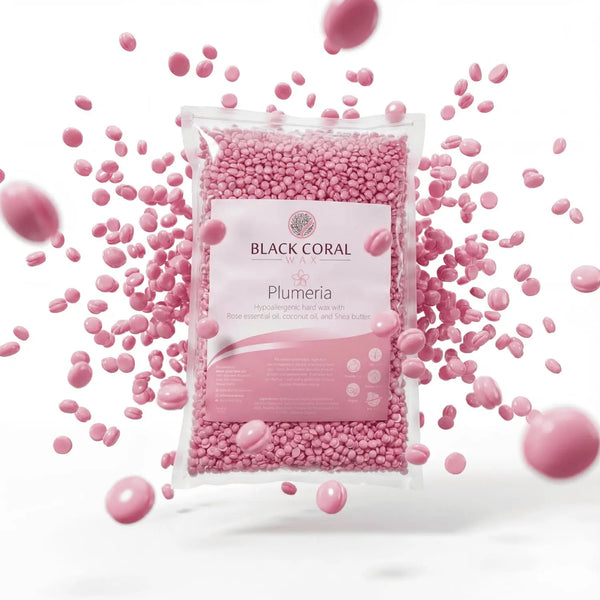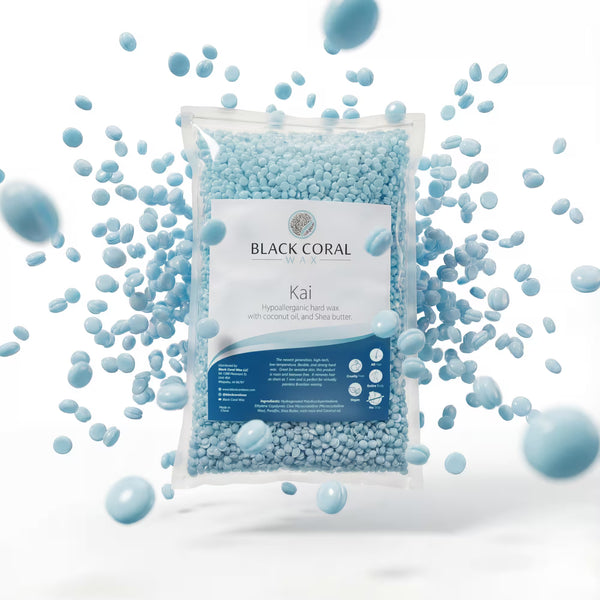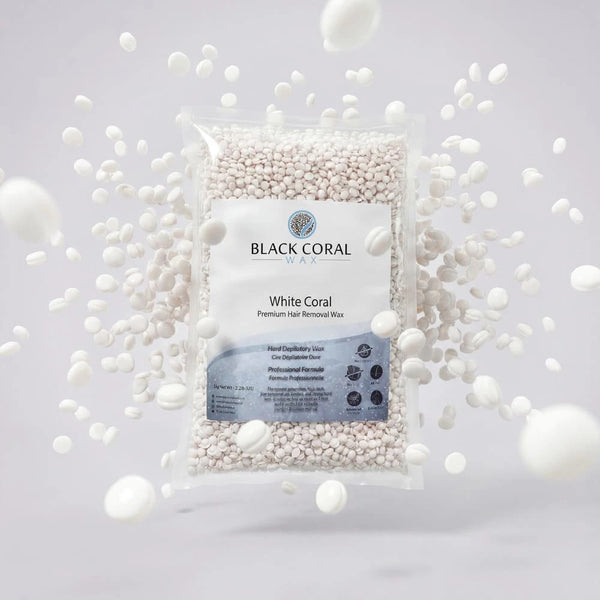
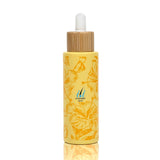


Professionals use hard wax on legs because it grips hair and not skin. This basic difference makes the experience more pleasant for clients, which means less irritation and results that last a long time and are smooth, which keeps clients coming back.
Why professionals like to use hard wax on legs
When aiming for flawless, silky-smooth legs, your choice of wax is a critical decision. It impacts everything from client comfort to service efficiency. While soft wax (or strip wax) has its place, seasoned experts consistently reach for high-quality hard wax for leg services.
The magic is in its mechanism. Hard wax is a stripless wax; you apply it warm, let it cool and “set,” and then remove the hardened strip on its own. As it cools, it shrink-wraps around each hair, creating a firm grip without adhering to the skin. This unique action is what makes it so incredibly effective yet gentle.
The Client Comfort Advantage
The primary reason professionals swear by hard wax for legs is how kind it is to the skin. Soft wax adheres to everything-both the hair and the top layer of the skin. Hard wax, conversely, almost exclusively grabs the hair. This targeted approach is a game-changer for your clients.
-
Less Painful: The removal feels much less painful because the wax isn't pulling on the skin itself. This makes the service a lot easier to handle, especially for clients who are new or nervous.
-
Minimal Skin Irritation: Less pulling means less redness, swelling, and bumps after waxing. This is a very important benefit when working on large, sensitive areas like the inner thighs.
-
Safer for Sensitive Skin: Because it is so gentle, it is the best choice for clients with reactive skin who might otherwise leave a strip wax service feeling very angry.
When you protect the skin's integrity, you're not just delivering a better result-you're building trust. A comfortable client is a loyal client.
To explore the technical differences, see our professional guide on hard wax vs. soft wax. Understanding when to use each is key to creating a service menu that truly meets every client's needs.
How to Decode Hard Wax Formulas for Perfect Results
Some hard waxes work better than others, especially on big areas like the legs. The melting point, set time, and flexibility of a formula are what make a service smooth and efficient or frustrating. To choose a professional-grade hard wax for legs that works every time, you need to know these things.
A good wax should melt at a low temperature that is safe for skin, harden quickly enough to keep your service on schedule, and stay soft enough to be removed in one piece without breaking.
This careful formulation is why the global hair removal wax market is expanding, with projections showing it could grow from USD 13.38 billion to USD 24.95 billion by 2032. Hard wax is a dominant force in the professional scene. For leg waxing, easy-to-use hard wax beads that melt at low temperatures-around 70°C (160°F)-are becoming the standard for professionals tackling all hair types.
The Parts of a Great Hard Wax
A hard wax must do well in three main areas to get perfect results on legs. Each one has a direct effect on how you work, how you use the product, and how comfortable your client is.
-
Low Melting Point: A lower melting point is better for the skin because it lowers the risk of burns and makes the experience more comfortable for the client. This is very important for waxing your legs, where you have to cover a lot of ground.
-
Ideal Set Time: The wax needs to set quickly enough to keep your appointment on time, but not so quickly that it breaks before you're ready to pull. At the right time, you can apply multiple strips in a smooth, efficient rhythm.
-
Exceptional Flexibility: This is perhaps the most important factor for leg waxing. A flexible wax moves with the body’s curves-like knees and ankles-and won't snap or crack during removal.
The ideal hard wax has a taffy-like pliability, ensuring it comes off in a single, complete strip that removes every hair with it.
Finding the right hard wax for leg waxing
When picking the right wax, you need to make sure that the formula's properties match the job. For leg waxing to be effective and comfortable, some things are not up for debate.
|
Characteristic |
Why It Matters For Legs |
Best For This Skin Or Hair Type |
|
Low Melting Point |
Reduces the risk of burns and discomfort over large surface areas. Allows for faster, more comfortable application. |
Ideal for sensitive skin or first-time clients who may be apprehensive about heat. |
|
Quick Set Time |
Speeds up the service, allowing the esthetician to lay multiple strips at once without long waiting periods. |
Perfect for experienced professionals working on clients with normal to oily skin, where wax sets predictably. |
|
High Flexibility |
Prevents the wax strip from cracking or breaking around contoured areas like knees, shins, and ankles. |
Essential for all leg waxing, but especially beneficial for clients with dry skin, as brittle wax can be more irritating. |
|
Strong Grip |
Ensures even the finest, shortest, or most stubborn hairs are removed in one pass, minimizing the need for re-application. |
A must-have for clients with coarse or fine hair, as it grabs both types effectively. |
You can choose a wax that works better and saves you time, money, and stress by knowing these things.
Why the Right Formula Makes a Big Difference When Waxing Your Legs
A poorly made wax can make a normal leg service hard. When you take off the wax, it will crack and break if it is too brittle. You will have to pick off small pieces and re-wax spots, which takes time, uses more product, and makes your client's skin feel bad.
On the other hand, wax that is too soft or takes too long to set can get sticky and leave a residue. Black Coral Wax formulas are made to find the right balance so that they always work well. Check out our guide on the different kinds of wax and how to use them to find out more.
A Professional Leg Waxing Method in Steps
A perfect leg wax needs a technique that works every time. Not only does mastering this process give clients the beautifully smooth results they expect, but it also makes you a more efficient esthetician.
There should be a smooth transition between each step, which is what makes a service great instead of just okay. If you own a salon and want to standardize your services, knowing how to make a step-by-step guide is very helpful for training new employees.
Step 1: Get the skin ready and clean it.
To provide a safe and effective service, you must prepare properly. This is because it gets rid of oils or bacteria on the surface that could stop the wax from sticking.
-
Thoroughly Clean: Start by cleaning the whole leg area with a professional pre-wax cleaner. This gets rid of any lotions, sweat, or oils that would keep the wax from sticking to the hair properly.
-
Use Pre-Wax Oil (a little bit): Next, put on a very thin layer of pre-wax oil. This makes a barrier between the skin and the wax that keeps the hard wax from sticking to the skin. This is the key to making things much more comfortable. Use a clean towel to soak up any extra; a little goes a long way.
Step 2: Putting on the wax and making a plan
Now that the skin is ready, it's time to apply the wax in a smart way. This is where your technique makes sure that everything is covered and that it will be easy to remove.
It is very important for the wax to stay at the same temperature. Your hard wax should be thick like honey and warm enough to spread easily but not so hot that it runs or is hard to control. Before applying to a client, always check the temperature on your own wrist.
Tips for applying for a job:
-
Do your work in small parts: Don't try to do the whole leg at once. Divide it into parts that make sense, like the knee, lower leg, and thigh. Put wax on in patches that are about the size of your palm.
-
Press down hard: Use your spatula to apply the wax in the direction of hair growth with steady, even pressure to make sure that each hair is completely covered.
-
Make a "lip" for removal: As you finish putting on a strip, make the end a little thicker. This "lip" makes a strong tab to hold onto when you take it off, which helps keep the strip from breaking.
-
Use the "Figure-Eight" Method: For wider areas like the thighs, a smooth figure-eight motion with your spatula can help you lay an even layer of wax without constantly reloading your applicator.
Stage 3: The Clean Pull And Removal
A clean, efficient pull is what minimizes discomfort and reveals flawlessly smooth skin.
Your wax is ready when it is no longer tacky to the touch but still feels pliable. If it’s too soft, it will stretch and leave residue. If it becomes too hard, it may crack. A fast-setting formula like Black Coral Wax makes this timing predictable, so you can apply several strips and remove them in quick succession.
Steps for Flawless Removal:
-
Brace the Skin: This is the most important step for client comfort. Use your free hand to hold the skin taut just below the wax strip.
-
Grip the Lip: Get a firm hold of the thicker "lip" you created during application.
-
Pull Cleanly and Quickly: In one swift, confident motion, pull the strip off parallel to the leg, moving against the direction of hair growth. Never pull straight up-pulling parallel is more comfortable and effective.
Troubleshooting Tricky Areas Knees and ankles can be challenging due to their curves and thinner skin. Use smaller, contoured strips to hug the shape of the joint. Having the client bend their knee slightly helps tighten the skin, making application and removal easier.
Mastering Temperature Control For Large Areas
Leg waxing presents a unique challenge: maintaining a perfect, consistent wax temperature across a large surface area. This is about more than efficiency; it is critical for achieving optimal results. Your professional-grade wax warmer is your command center, ensuring your wax stays at that ideal honey-like consistency from the first strip to the last.
Mastering this control is what separates a good esthetician from a great one. The temperature of your hard wax for legs affects everything from client safety to product performance.
If the wax is too hot, it becomes runny, difficult to control, and a serious safety hazard. Conversely, wax that is too cool will be thick and stiff. It won't grip the hair properly, leading to a patchy, frustrating service.
Why You Need a Professional Wax Warmer
A professional-grade warmer is necessary to reach and maintain the perfect temperature. These units have accurate thermostats that keep the wax in its best working range and stop dangerous temperature spikes. This means that each strip works exactly the same way as the one before it, which is what you need for a smooth, quick workflow.
When the temperature stays the same, you can work in a rhythm by putting on multiple strips one after the other. You can apply the next strip while the first one is still setting, which makes the process quick and easy. This is where a formula like Black Coral Wax that works well and is dependable really shines.
How to Make Your Workflow More Efficient
A smart workflow is what makes a leg waxing service run smoothly. You can cut down on service time while still getting great results by working in a planned order.
-
Rotational Application: Put a strip on the front of one shin, then move right away to the other leg and put a strip in the same spot. The first strip should be ready to come off by the time you get back to the first leg.
-
Sectional Work: Break the leg up into smaller parts: the lower leg (front and back), the knee area, and the thigh (front and back). By only working on one section at a time, you won't get overwhelmed and you won't miss any spots.
-
Consistent Strip Size: Using strips of the same size for the same areas makes it easier to guess when to set up, which speeds up your removal process even more.
This level of control and efficiency is becoming more and more important. By 2032, the North American depilatory wax market is expected to grow from $4.13 billion to $7.11 billion. Over 60% of estheticians in this market now prefer hard wax beads for legs because they miss fewer hairs-less than 5% compared to the 12% that are common with soft wax.
Aftercare for Waxing to Stop Ingrown Hairs
A good leg wax doesn't stop when you leave the treatment room. To keep skin smooth for a long time, clients need to know how to take care of it at home, and it's your job to show them how. Teaching clients about aftercare not only stops ingrown hairs, but it also shows that you know what you're talking about and builds trust.
The first 24 to 48 hours are very important. The skin is most sensitive during this time, and the follicles are open, which makes them easy for bacteria and irritation to get in. Give your clients a set of simple but strict rules to follow to keep their skin safe after waxing.
Instructions for Immediate Aftercare
Put on a high-quality, non-comedogenic post-wax oil right after the service. This step is not up for discussion. It soothes redness, gets rid of any wax residue, and moisturizes the skin without blocking pores.
Things clients should and shouldn't do in the first 48 hours:
-
DO wear loose, breathable clothes like cotton to cut down on friction.
-
If your skin feels warm or sensitive, use a cold compress.
-
Don't touch, rub, or scratch the area because this could let bacteria into open follicles.
-
Don't let your skin touch hot tubs, saunas, pools, or the sun directly because heat and chemicals can irritate it.
-
Don't do hard workouts that make you sweat too much and rub against things.
A professional service is like a partnership. You help clients protect their investment and get the beautiful results they want from their hard wax for legs service by giving them clear aftercare advice.
Preventing Ingrown Hairs for a Long Time
After the first 48 hours of being sensitive, the focus changes to long-term care. Exfoliation and moisturizing are the two most important things you can do to stop ingrown hairs.
To get rid of dead skin cells that can trap new, finer hairs, you need to exfoliate gently two to three times a week. Moisturizing your skin every day keeps it soft and flexible, which makes it easier for hair to grow through. A good moisturizer is important for clients with dry skin. You could also tell them to look into the benefits of using organic body oil on dry skin to keep it healthy and hydrated.
Professional products made to get rid of ingrown hairs can be very helpful as an extra layer of protection. If you want to learn more, check out our full guide on how to avoid ingrown hairs after waxing.
Picking the Best Black Coral Wax for Your Salon
The first step to turning your skills into a great service is to get the right tools. Your wax is the most important thing you need to wax your legs. We make our signature blends in the USA at Black Coral Wax, specifically for the needs of a busy salon. We focus on speed, client comfort, and getting the same results every time.
The best hard wax for legs is one that works well with your client's skin and hair type. A high-quality wax is a partner in your work that you can always count on.
Finding the Right Formula for You
We have a wide range of products to meet the needs of all of our clients, from fine, downy leg hair to coarse, stubborn growth. Every one of our formulas is a unique tool for a certain task.
-
For Sensitive Skin: To keep irritation and redness to a minimum, you need a hypoallergenic blend with a low melting point. This will make the experience as gentle as possible.
-
If you have coarse hair, choose a formula with a strong grip that can wrap around thick, tough hairs and pull them cleanly from the root without breaking them.
-
Use a fast-setting wax for big areas like legs when you want to speed up waxing. It makes it possible to use a rotational application method that can cut down on service time by a lot.
Hard wax now makes up 32% of the global hair removal wax market, which is expected to grow from USD 10.78 billion to 16.31 billion by 2031. This growth is because professionals trust brands like Black Coral to give them quality they can count on. Learn more about this trend that is becoming more popular.
The Professional Benefit of Buying in Bulk
In the beauty industry, consistency is very important. You can't run out of your favorite wax in the middle of a service. Buying in bulk makes sure you're always ready for back-to-back leg appointments, which keeps your work flow smooth and your costs low. Our professional sizes are made for salons that do a lot of business and care about quality.
Working with a high-end brand is a way to ensure dependability. A service that builds loyalty has three main parts: consistent performance, set times that are easy to plan, and better comfort for clients.
Are you ready to find the right treatment room for you? We invite you to look through our carefully chosen selection of the best wax for legs and see how Black Coral Wax can become your go-to tool.
Frequently Asked Questions About Hard Wax for Legs
Even experienced professionals have questions about a full leg wax. Having clear answers boosts confidence and makes sure that every client service goes smoothly, safely, and quickly. Let's talk about some of the most common questions estheticians get.
How much hard wax do I need to do my whole leg?
We can give you a good starting point, but it will depend on the client's height, hair density, and how you apply it.
You should plan on using between 450 and 680 grams (about 1 to 1.5 pounds) of hard wax beads for a full leg service.
Buying in bulk is the best way to go for a busy salon. Our bigger bags and professional wholesale options are made to make sure you never run out of supplies in the middle of a service. This keeps your back bar stocked and your costs down.
Is it okay to use hard wax on people with sensitive skin or varicose veins?
Yes, and in a lot of cases, it's the better choice. A good hard wax is best for sensitive skin because it wraps the hair, not the skin. This makes the experience much more comfortable for your client because it greatly reduces irritation and redness after waxing.
With varicose veins, you need to be extra careful. Do not put wax directly on top of big, bulging veins. Instead, use smaller, controlled strips to work carefully around them.
Always do a patch test first, and keep talking to your client about how comfortable they are. Our gentle, low-temperature formulas are made to put as little stress as possible on sensitive skin.
How long should a hard wax strip stay on your legs?
A strip on the legs should usually be set for 30 to 60 seconds. But this can change depending on the type of wax you use and the temperature and humidity in the room where you get your treatment.
The best time to remove the wax is when it is no longer sticky but is still flexible. You don't want it to feel brittle or break. A reliable professional wax, like those from Black Coral, is made to set in a certain amount of time every time. This lets you find a good rhythm by using several strips in a row to speed up the full leg wax service.
We at Black Coral Wax want you to be successful in your career, so we offer high-quality hard wax.
Visit us today to see our full range of professional waxing supplies.