The Professional Benefits of Hard Wax Beans
As an esthetician, you need to build a good reputation by giving services that work and feel good. Hard wax beans do a great job in both areas, making the whole waxing process better. The focus of the technique is on being accurate and quick. Once the beans are melted and put on, the wax cools and hardens into a flexible strip that can be held and taken off without fabric strips.
As it dries, the wax wraps around each hair and holds it tightly at the root. This is a big change from regular strip wax, which sticks to both hair and skin. Hard wax makes things a lot less painful by getting rid of the painful pull on the skin. It also makes redness after treatment less noticeable.
Why Hard Wax Is Trusted by Estheticians
The benefits go beyond making your clients more comfortable; they also make your work easier and improve your results. This is why professionals in the field always choose it:
-
Better for Skin That Is Sensitive: It is the best for sensitive areas like the bikini line, underarms, and face, without a doubt. Customers notice and like how soft it feels.
-
Works well on thick hair: Hard wax is the best option for clients with thick, stubborn hair. Its strong grip makes sure that it pulls cleanly from the root, which cuts down on hair breakage and the chance of ingrown hairs.
-
No Need for Strips: The stripless method makes the workplace cleaner. It needs fewer supplies to keep on hand and makes your work easier when you have back-to-back appointments.
This choice isn't a trend; it's a change in professional standards. The global wax market keeps growing because professionals want products that work well and make their clients feel good.
Any esthetician needs to know how to choose the right wax. Check out our full guide comparing soft wax and hard wax to learn more.
Of course, technique is not the only thing that matters for success in business. It's also important to run your business in a smart way. Looking into ways to boost salon profits with digital queue management can give you useful information. In the end, buying high-quality hard wax is an investment in your business's growth, your professional reputation, and your clients' happiness.
The Science of a Perfect Pull
Have you ever noticed that one hard wax bean formula goes on smoothly, but another feels stringy or brittle? Formulation science is what caused that difference. The right balance of key ingredients in a professional wax is what makes it work. Each ingredient is chosen for a specific purpose to make removal easy and painless.
Natural resins, which come from pine trees, are what make up the best hard wax. These ingredients give the wax its basic grip, which lets it shrink-wrap and stick tightly to the hair shaft. Resin is the glue that holds each hair in place, making sure that even the thinnest strands are pulled out from the root.
But resin by itself would be too hard and likely to break. This is when flexible polymers come into play. These synthetic additives are necessary to make a wax that is flexible and forgiving and won't snap or break when you take it off. They give the wax its signature elasticity, which lets you make a clean strip that moves with the body's natural curves.
Finding a balance between comfort and performance
Making a high-quality wax requires more than just grip and flexibility. The formula needs to be tweaked for use in a professional salon, where client comfort and efficient workflow are very important. This is where lab-tested formulas show their worth in this balancing act.
-
Low melting point: Professional-grade waxes are made to melt at lower temperatures. This is very important for safety and comfort. The wax should be warm enough to apply easily, but not so hot that it burns or shocks a client with sensitive skin.
-
Quick Set Time: When a salon is busy, getting things done quickly is important. A well-made wax sets up quickly, turning into a flexible strip in just a few seconds. This helps your workflow run smoothly, so you can finish services quickly without sacrificing quality.
-
Soothing Additives: The best formulas often have plant-based extracts like chamomile that are good for the skin. These extras help soothe the skin and reduce redness, making the post-wax experience better for your client.
A great hard wax formula works with the skin instead of against it. It is made to not only remove hair, but also to do so with as little harm as possible, so that the skin feels calm and smooth right after the service.
This scientific method makes sure that every pull is clean, steady, and comfortable. Knowing what the ingredients are and what they do makes it even more important to choose a professional-grade product. It has a direct effect on the quality of your work, the experience of your client, and the health of their skin. This is especially true when you think about things like hair growth cycles. You can learn more about how men's and women's hair grows differently to become more knowledgeable.
How to Pick the Best Hard Wax Beans for Your Clients
A good esthetician is someone who knows how to choose the right hard wax beans. It's not about using the same wax for every job; it's about finding the right formula for each client so that they get perfect, comfortable results that keep them coming back.
Think of yourself as a wax expert who knows how to mix the right amount for each client's specific needs. The first step in this process is a quick but professional look at their hair type and the area of the body that is being treated. These two things will help you decide if you need a softer, creamier wax or one that grips better.
Determining Hair Type and Treatment Area
First, look closely at the hair. Is it fine, vellus hair that usually grows on the upper lip, or is it the rough, stubborn type that grows in the underarms or during a Brazilian service?
-
Fine to Medium Hair: A creamy, gentle formula is best for delicate areas like the face or for people with less dense hair. These waxes often have ingredients that help calm redness on sensitive skin.
-
Hair that is rough or hard to manage: You need a wax that grips well and has good elasticity when you want to treat thick, deeply rooted hair. These strong formulas wrap tightly around each strand, pulling it cleanly from the root without breaking it.
Next, think about the area where the treatment will take place. One size doesn't fit all when it comes to skin care because the skin on the face is much more sensitive than the skin on the legs. A strong body wax might be too harsh for the face, and a gentle facial wax might not have enough grip for a Brazilian.
A good esthetician will always have at least two kinds of hard wax on hand: one that is gentle enough for the face and other sensitive areas, and another that is stronger for coarse body hair. This preparation makes sure you can confidently meet the needs of any client.
What to Look for in Performance
Think about what works best for your work flow in addition to your hair and skin type. Different formulas have different textures and set times, which can speed up or slow down your service.
In a busy salon, a wax that sets quickly is very useful because it lets you quickly apply and remove strips from small areas. On the other hand, a formula that dries more slowly and is more flexible is better for bigger areas like the legs or back because it gives you more time to lay a perfect, even strip.
When you work with clients who have very sensitive skin, it's very important to find the best hard wax for sensitive skin.
Choosing the right wax formula is an important part of giving great service. We've developed a simple guide to help you compare our Black Coral Wax formulas, making it easier to select the perfect match for every client.
Black Coral Wax Formula Comparison Guide
|
Wax Formula (e.g., Plumeria, Kai)
|
Best For (Skin/Hair Type)
|
Ideal Body Areas
|
Key Performance Trait
|
|
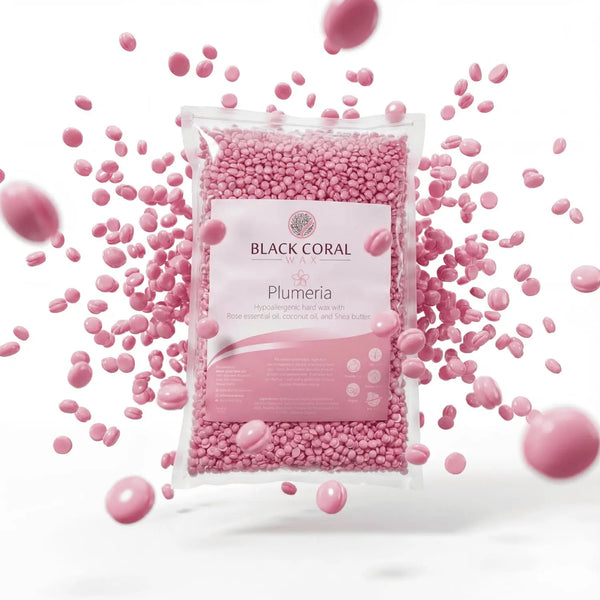
Plumeria
|
All Skin & Hair Types (especially sensitive)
|
Full Body, Brazilian, Face
|
Ultra-flexible, low-temp, all-purpose hero
|
|
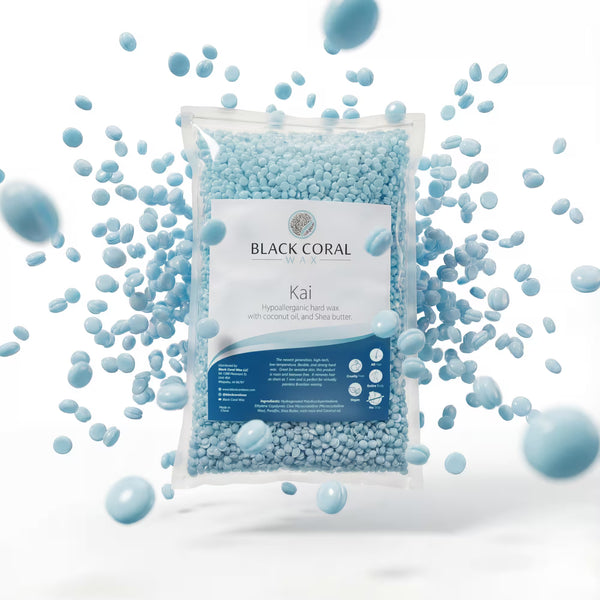
Kai
|
Normal to Oily Skin, Coarse Hair
|
Brazilian, Underarms, Legs
|
Superior grip, great for humid climates
|
|
Mae Mae
|
Sensitive/Delicate Skin, Fine to Medium Hair
|
Face, Brows, Underarms
|
Creamy, gentle, and calming formula
|
|
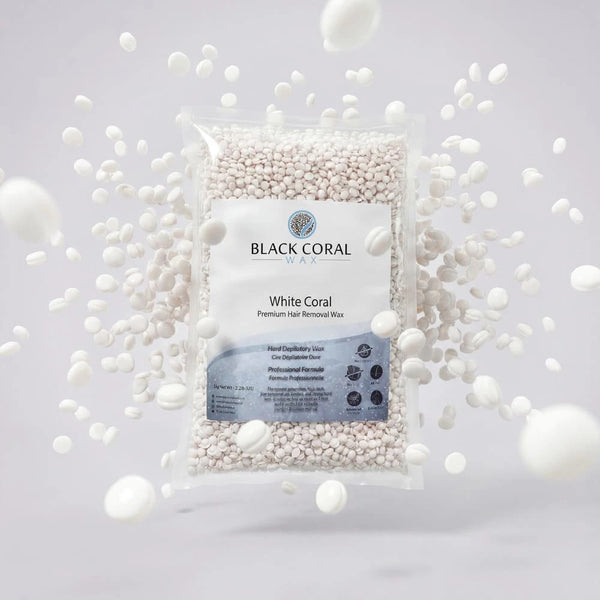
Coral
|
All Skin Types, Fine to Coarse Hair
|
Full Body, Large Areas (Legs/Back)
|
Fast-setting, strong, great for speed waxing
|
By taking a moment to analyze your client's needs and understanding the unique characteristics of each wax, you can consistently deliver the comfortable, effective, and professional results that build loyalty and trust.
Getting the hang of how to apply hard wax
The other half of the equation is how you apply the wax. Using high-quality hard wax beans is only half of it. This is where a normal service becomes a comfortable, accurate, and professional one that makes customers want to book their next appointment right away. The process starts before the wax even touches the skin.
Perfect skin preparation is the key to a perfect application. This step is not up for discussion because it makes sure the wax works exactly as it should.
The Important Pre-Wax Ritual
First, always use an antiseptic pre-wax cleanser to clean the area where you will be getting the treatment. This gets rid of oils, lotions, or sweat on the surface that could keep the wax from sticking. Think of it as making a clean slate for the best results.
Next, put on a very thin layer of pre-wax oil. This makes a barrier that protects the skin and makes sure the wax wraps around the hair, not the skin. This one step makes a big difference in making the process less painful and keeping irritation from happening after waxing.
What makes a professional service stand out is how well they prepare. It makes sure that the wax only sticks to the hair, which is what hard wax is known for: clean results and a gentle experience.
Last, make sure the hair is the right length for waxing, which is about 6 mm, or the length of a grain of rice. The wax won't stick to the hair if it's too short. It can be less comfortable to take off if it is too long. You can find more in-depth instructions on how to use hard wax in our professional guide.
The Skill of the Application
Now that the skin is ready, it's time to focus on the wax. Your wax warmer should have a perfect, honey-like consistency. The wax should never be thin or watery. Instead, it should slowly and thickly drip from your applicator, giving you full control.
To stop drips, dip your applicator and twist it. After that, push the wax firmly and confidently in the direction of hair growth. This motion makes sure that every hair is coated from the root, which makes it easier to pull.
Make the end of the strip a little thicker as you lay it down to make a small "lip." You don't need to cover any hair with this tab; its only job is to give you a clean handle so you can take it off quickly and easily. A professional has a well-formed lip, which keeps things from getting messy and makes the experience more comfortable for your client.
Changing Your Method for Different Areas
There is no one-size-fits-all way to do professional waxing. An experienced esthetician knows how to change their technique to fit the needs of each body part.
-
For the face (upper lip and brows), use a smaller applicator to get the job done right. To get the clean, sharp lines that clients want, work in small, controlled areas.
-
For the Bikini Area: Hair in this area often grows in different directions. The most important thing is to work in small, manageable patches and apply the wax according to how each area grows.
-
For the armpits: Underarm hair can grow in more than one direction, just like bikini line hair. To get every hair, you will probably need to wax in at least two different places, one going up and one going down.
By learning how to make these small changes, you can turn a simple hair removal service into a true art form that always gives you perfect results.
Fixing common problems with hard wax
Even the best estheticians run into problems from time to time. A professional knows how to handle problems calmly when they come up, even if they always want to get the wax just right.
Being able to fix hard wax beans gives your clients a lot of faith in you. It shows that they are in good hands and makes sure they get the smooth, impressive results they want.
A few common things that can cause problems with waxing are the temperature, how thick the application is, or how well the skin is prepared. Once you know what's wrong, the fix is usually simple, so you can get back on track without stopping the service.
Wax That Breaks or Gets Brittle
One of the most annoying things is when a wax strip breaks when you take it off. This almost always means one of two things.
-
The application was too thin: a layer of wax that is only a few sheets thick doesn't have the strength to stay together when you take it off. A good rule of thumb is to try to make it as thick as a nickel.
-
You left the wax on for too long. Hard wax is meant to be taken off when it is hard but still flexible. It cracks when it cools down completely because it becomes hard and brittle.
Stay calm if a strip breaks. Just put a new patch of warm wax over the broken piece, making sure the edges overlap. Make a new lip and let it set for just long enough to stick to the layer below. Then, in one smooth motion, take them both off.
Stubborn Stuff Left On The Skin
After a pull, you might find small, sticky spots of wax left behind from time to time. This usually means that the wax wasn't completely dry before it was taken off, or that there wasn't enough oil before waxing to make a good barrier.
Do not try to pick or scrape it off, as this can make skin that has just been waxed more sensitive.
The answer is much easier and kinder. Put some good post-wax oil on a cotton pad and rub it gently over the areas that are sticky. The oil will break down the wax, making it easy to wipe away and soothing the skin at the same time. If you want to know more, our guide on how to get wax off skin has you covered.
The need for formulas with strong adhesion and stripless technology keeps growing as more estheticians look for high-performance products. This trend around the world shows that the industry is moving toward better, more reliable waxes. If you know these formulas inside and out, you'll be at the top of your field.
Your Hard Wax Questions Answered
Even seasoned professionals have questions when perfecting their hard wax technique. This guide addresses the most common inquiries we receive from estheticians. It is filled with clear, expert answers to help you troubleshoot, build client confidence, and refine your waxing services.
Consider this your go-to resource for all things hard wax. When you master these details, you set yourself up to deliver flawless, professional results every single time.
What Is The Ideal Temperature For Melting Hard Wax Beans?
The ideal temperature is best measured by consistency, not a specific number on a dial. You are aiming for a texture similar to thick, warm honey or molasses. It should drizzle slowly from your applicator, not run off like water. This slow drizzle provides total control during application.
Always use a professional wax warmer with a reliable thermostat and follow the manufacturer's recommendations. Most professional formulas are designed with a low melting point for client comfort and safety. Before the wax touches your client, always test a small patch on your inner wrist. It should feel comfortably warm, never hot.
Can I Use Hard Wax Beans On All Parts Of The Body?
Absolutely. Hard wax is incredibly versatile, but it truly excels on sensitive, smaller areas where the skin is more delicate. Its ability to grip hair without adhering to skin makes it the go-to choice for services such as:
-
Brazilian and bikini line waxing
-
Underarm hair removal
-
Facial waxing (eyebrows, upper lip, chin)
While it can be used on larger areas like legs or arms, its targeted application makes it ideal for delicate zones where client comfort is the top priority.
Why Is My Hard Wax Breaking During Removal?
This common frustration almost always stems from one of three factors. First, the application may be too thin. A strip without sufficient body will lack the strength to come off in one piece. Aim for an application approximately the thickness of a nickel.
Second, you may be leaving it on the skin for too long. When the wax cools completely, it becomes brittle and snaps. Hard wax is ready for removal when it is firm to the touch but still has some flexibility.
Finally, a low-quality formula may lack the pliable polymers needed for a clean pull. Using a high-quality, professional-grade wax with excellent flexibility is essential for preventing cracking and achieving a smooth, satisfying removal every time.
A professional wax should never be a gamble. Its performance must be consistent and reliable, allowing you to work with confidence and precision from the first application to the last.
How Should I Prepare The Skin For The Best Results?
Proper skin preparation distinguishes a standard service from a truly professional one. It is the foundation for a less painful experience and cleaner results. Do not skip this step.
Begin by cleansing the area with an antiseptic pre-wax solution. This removes any surface oils, lotions, or sweat that can interfere with the wax's grip.
Next, apply a very light layer of pre-wax oil. This is the key to a comfortable pull. It creates a protective barrier so the hard wax beans adhere only to the hair, not the skin. This one step makes a significant difference in client comfort and reduces post-wax irritation, demonstrating how gentle a professional hard wax service can be.
At Black Coral Wax, we are dedicated to equipping professionals with the highest quality products and knowledge for exceptional waxing services. Discover our complete collections and elevate your craft.
Explore Our Professional Wax Collections