Plus-Size Friendly Brazilian Wax: Expert Tips for Every Body
A new client books a Brazilian and adds one line in the notes: “I’m plus-size and a little nervous.” You want to make the service smooth, respectful, and technically excellent, but you also know standard training often skips the details that matter most.
That’s where a Brazilian waxing on plus-size women becomes less about “special treatment” and more about polished fundamentals. Clear intake. Better positioning. Smarter draping. Tension control. A room setup that supports the client instead of asking the client to adapt to the room.
Clients notice that difference immediately. So do your retention numbers, your timing, and your confidence behind the table.
FREE COURSE
Turn Your Passion for Beauty Into a $75K+ Waxing Business
GET IT NOW!
Course successfully sent. 🎉
Please go to your inbox to receive it.
Embracing Inclusivity: A Guide to Plus-Size Waxing
In the U.S., approximately 67% of women are plus-size. That tells you one thing: a plus-size waxing is not a niche skill.
A lot of professionals already understand the technical side of hair removal. The gap is often the full experience around it. Product choice matters, and so do workflow tools, but products alone won't make a client feel safe. The service has to feel prepared from the first message to the final aftercare talk.
A size-friendly Brazilian isn't a different service category. It's a higher standard of professional preparation.
If loyalty is one of your salon goals, this work overlaps directly with building stronger client retention in a waxing salon. Clients return where they feel anticipated, not tolerated.
Mastering the Consultation: Confident Communication and Consent
The consultation sets the tone before you touch a glove. If your language is awkward, overly cautious, or full of assumptions, clients feel it right away. Calm, direct phrasing works better.
Start with questions that focus on comfort and logistics, not body commentary. You’re not asking a client to justify her size. You’re asking what helps her have a successful service.
On the phone or in booking messages, keep it simple:
-
For first contact: “If there are any positioning, mobility, or comfort preferences you’d like me to know before your appointment, feel free to add them to your intake.”
-
For first-time Brazilian clients: “I’ll walk you through each step and check in before position changes or more sensitive pulls.”
-
For nervous clients: “You’re always in control of the pace. If you need a pause, we pause.”
In the treatment room, practical questions are preferred over vague ones.
| Ask this |
Instead of this |
| “Do you have any positions that are uncomfortable for your hips, knees, or lower back?” |
“Can you get into butterfly okay?” |
| “Would you like an extra drape while we work in sections?” |
“Are you modest?” |
| “Do you want me to talk you through each step or keep it quiet?” |
“Are you anxious?”
|
If your intake forms need work, review esthetician client consultation form guidance. The strongest forms gather useful information without sounding invasive.
Setting Up for Success: Positioning and Draping Techniques
You can solve a lot of potential problems before the first strip-free pull by setting the table correctly.
Use support pieces with purpose:
-
Behind the knees: A bolster softens hip external rotation and reduces lower-back strain.
-
Under one hip if needed: A small wedge can improve visibility on one side without forcing the client into a harder open position.
-
Under the lower back or upper shoulders: Thin support helps clients who feel pull through the lumbar spine when lying flat.
-
Within reach: Keep extra drapes, gloves, powder, sticks, and wipes on the dominant-hand side so you don’t break flow.
Draping matters just as much. Use one drape to cover the abdomen and upper thighs, then fold back only the section you’re working on. For clients with a lower belly or fuller mons area, a second towel can anchor coverage while still giving you a clean field.
Positioning options that work better than forcing butterfly
If butterfly is uncomfortable, don’t keep coaching the client deeper into it. Try alternatives.
-
Diamond legs
Feet farther from the pelvis, knees less open. Good for clients with tight hips.
-
Single-side open
One leg relaxed outward while the opposite stays more neutral. Better for asymmetry or knee sensitivity.
-
Edge assist
Slide the client slightly lower on the table for back access, then use draping and verbal cueing instead of asking for a dramatic twist.
If a position needs repeated correction, it usually isn't the right position.
Advanced Wax Application for Bigger Body
Technique either supports comfort or fights it. For plus-size clients, your wax has to stay workable across curves, variable skin density, and areas where friction may have made the skin more reactive. Professional hard wax with a low melting point and enhanced elasticity is critical for plus-size clients because it reduces mechanical stress, helps prevent bruising, and increases comfort in sensitive areas.
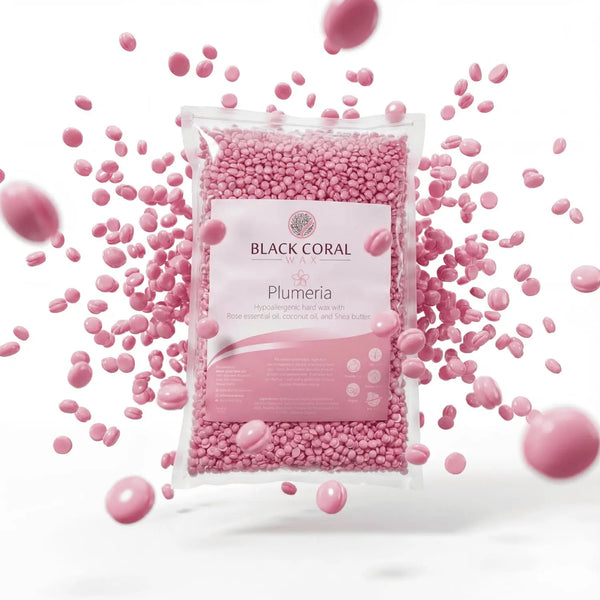
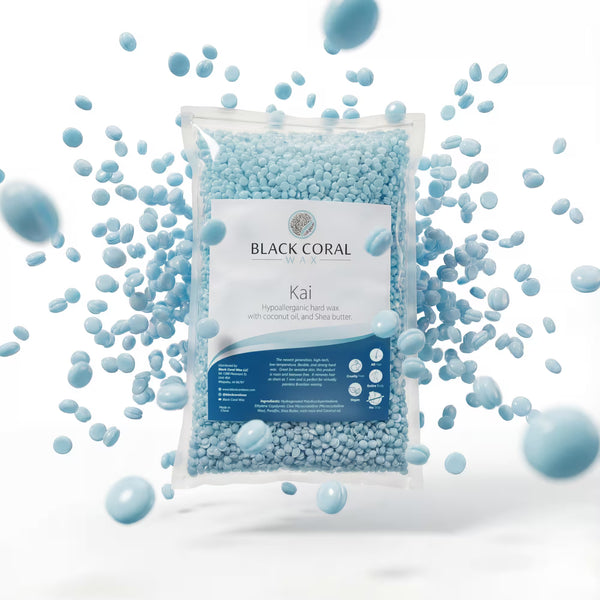
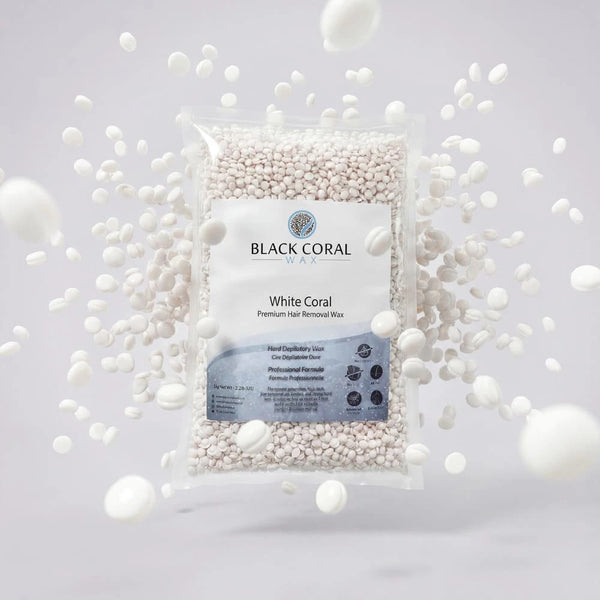
You need a formula that sets cleanly, flexes on removal, and doesn't turn brittle when you're working smaller corrective sections. Black Coral Hard Wax fits that role because it’s formulated for strong grip with a flexible pull and lower working temperature.
What works on fuller contours
Application has to get more deliberate as contours increase.
-
Use smaller sections: Large applications are harder to control and harder to remove cleanly over softer tissue.
-
Apply with intention: Lay the wax thin and even, then build a clear lip for removal.
-
Anchor the skin first: Taut skin matters more than speed.
-
Pull parallel, not up: Keep the removal close to the skin to limit drag.
When working around body folds, don’t chase visibility by stretching the wax pattern wider and wider. Improve access first. Reposition. Redrape. Use your non-dominant hand to create tension where the skin wants to move with the pull.
What usually goes wrong
A lot of poor results come from trying to wax plus-size tissue the same way you wax firmer, flatter surfaces. Common mistakes include:
-
Overheating the wax: Warmer is not better. Hotter wax increases stress on already sensitive skin.
-
Using oversized pulls: Bigger sections often snap, smear, or leave patchy regrowth.
-
Skipping powder where needed: Moisture management matters in fold-prone areas.
-
Pulling before full set: Soft wax film on a contoured area usually means breakage or extra discomfort.
Keep the service methodical. Clients feel safer when your hands are steady and your pattern is consistent.
Knowing the theory is one thing, seeing it done is another. That's why we created a step-by-step video course at Black Coral Academy, designed to show you exactly how a plus-size Brazilian wax looks in a real salon setting. Whether you're just starting out or looking to refine your technique, this course gives you the clarity and confidence to serve every client beautifully.
How to Handle Common Challenges
A smooth service doesn't depend on the client fitting one textbook position. It depends on you adapting without turning the appointment into a struggle.
If the client has limited mobility
Don’t insist on knees dropped wide or ankles pulled in close. Work one side at a time, then adjust the pelvis with a small wedge or folded towel. For backside access, side-lying can be cleaner and less stressful than repeated rolling and scooting.
If perspiration starts interfering
Pause and reset. Blot moisture, use appropriate prep again, and reduce your working section. Trying to “push through” on damp skin usually creates poor adhesion and more discomfort.
If tissue softness makes tension tricky
Use two-point tension instead of one strong stretch. One hand anchors near the pull line while the other supports adjacent tissue. Sometimes the client can assist by holding a position or supporting an area, but only if you ask clearly and only if it feels comfortable for her.
A few quick fixes help in real appointments:
-
For slipping wax film: Work smaller and verify the skin is dry before reapplying.
-
For repeated hair breakage: Check growth direction again. Intimate hair rarely grows in one neat pattern.
-
For a tired client: Break the service into short checkpoints so she can reset her legs and hips.
-
For your own strain: Move your stance and table height before you blame the body in front of you.
The service gets easier when you stop trying to win against anatomy and start working with it.
A plus size friendly Brazilian wax comes down to three things: better communication, better comfort infrastructure, and cleaner technique. If you want tools and education that support that standard, explore Black Coral Wax for professional wax collections, pre- and post-care, and training resources built for modern waxing services.
Frequently Asked Questions About Plus-Size Brazilian Wax
Is a plus-size Brazilian wax a different service?
Not really. The core service is the same, but the execution is more thoughtful. The difference is in consultation, setup, draping, tension control, and pacing.
Should you book extra time for plus-size clients?
If the client is new, nervous, or has mobility concerns, extra time helps. It gives you room to consult, position well, and avoid rushing.
Is hard wax better for this service?
In most cases, yes. Hard wax is usually the better fit for sensitive intimate areas and contoured sections because it allows more controlled removal.
Should clients help hold skin?
Sometimes, yes. Clear guidance can make the service easier, but it should always be optional and based on consent.