Your Professional Guide to Preventing Bumps After Waxing
Bumps after waxing are a common skin reaction to hair being pulled from the root, often appearing as temporary red bumps from irritation or small white bumps indicating mild folliculitis. This is your skin's way of signaling it needs gentle, professional care as the follicles recover.
FREE COURSE
Turn Your Passion for Beauty Into a $75K+ Waxing Business
GET IT NOW!
Course succesfuly sent. 🎉
Please go to your inbox to recieve it.
Understanding Why Bumps Appear After Waxing
Achieving perfectly smooth, hair-free skin is the goal of every waxing service. However, small, raised bumps can sometimes appear, disrupting the flawless result. While frustrating, this is an extremely common side effect of hair removal.
These minor bumps are typically temporary and entirely manageable. When a hair is removed from its root, the follicle is left open and vulnerable. The skin experiences a degree of stress, and these bumps are its natural reaction. The first step toward resolving them is correctly identifying the cause.
The Three Main Culprits Behind Post-Wax Bumps
Most post-wax bumps fall into one of three distinct categories. Once you can differentiate them, you'll know exactly how to guide your skin back to a calm, smooth state.
-
Folliculitis is the medical term for hair follicles that are inflamed. It often looks like a mild case of acne with a bunch of small, red bumps or whiteheads. Folliculitis is a sign that bacteria have gotten into the open follicles. It might also be itchy or painful, and it usually shows up one or two days after waxing.
-
Histamine Reaction: If you see redness or small, hive-like bumps right after a service, it's probably a histamine reaction. This is how the body reacts to what it thinks is "trauma" from hair removal: it sends inflammatory responders to the area, which makes it swell for a short time. The good news is that it usually doesn't last long, going away in a few hours to a day.
-
Ingrown hairs show up days or even weeks after waxing, so they are late offenders. When new hair growth gets stuck under the skin and curls back on itself, it causes ingrown hairs. The result is a bump that hurts and is raised. This is called pseudofolliculitis in medicine.
To help you quickly identify what's happening, here is a simple comparison chart.
A Quick Guide to Identifying Post-Wax Bumps
Use this table to quickly differentiate between the common types of bumps that can appear after a waxing service, helping you choose the right care strategy.
|
Bump Type
|
Appearance
|
When It Appears
|
Primary Cause
|
|
Folliculitis
|
Small red bumps or whiteheads, like acne
|
1-3 days after waxing
|
Bacteria entering open follicles
|
|
Histamine Reaction
|
Red, hive-like rash or small bumps
|
Immediately or within a few hours
|
Body's natural inflammatory response
|
|
Ingrown Hairs
|
Raised, often painful red bumps
|
Days or weeks after waxing
|
Hair growing back into the skin
|
Knowing the difference is key to effective aftercare. An immediate histamine reaction may only require a simple cold compress, while delayed folliculitis will benefit from a targeted antimicrobial treatment.
Professional Insight: The primary goal of post-wax care is to keep the follicles clean, calm, and unobstructed. A proper aftercare routine minimizes the risk of bacterial introduction and ensures new hairs can grow back freely without getting trapped.
Understanding these distinctions puts you in control. For a deeper look into specific issues like small white bumps, consult our guide on white bumps after a bikini wax.
The Science Behind Post-Wax Skin Reactions
To effectively prevent bumps after waxing, it's helpful to understand what's happening at a microscopic level. While waxing is an excellent method for achieving smooth skin, removing hair from the root creates thousands of temporary micro-openings. This is a normal part of the process and initiates a chain reaction as your skin works to heal and protect itself.
Think of each hair follicle as a small pocket in the skin. When hair is extracted, that pocket is left open and vulnerable. The skin's primary job is to close this opening and block potential invaders, like bacteria. This natural defense mechanism causes the common reactions we see on the surface. Understanding these biological responses is key to mastering post-wax care.
Folliculitis: The Bacterial Battle
One of the most frequent culprits behind post-wax bumps is folliculitis. In simple terms, this is an inflammation of the hair follicles. It typically appears as small, red, or white-headed pustules one to three days after waxing. This occurs when common skin bacteria, like Staphylococcus aureus, enter the open follicles and proliferate.
The skin hosts a natural ecosystem of bacteria, most of which is harmless. However, when the follicle's protective barrier is temporarily removed, these bacteria can penetrate deeper than they should, triggering an inflammatory response. This is precisely why professional hygiene—including sanitized tools, a sterile environment, and impeccable hand cleanliness—is non-negotiable.
Histamine Reactions: The Body's First Responders
A patch of red, hive-like welts that appears almost immediately after a wax is a classic histamine reaction. This is not an infection or an allergy; it is the body's own defense system responding to the physical action of hair removal.
The body perceives the hair removal as a minor injury and releases histamines in response. These chemicals make blood flow to the area faster to start the healing process. This sudden burst of activity makes things red, swollen, and itchy for a short time. Even though it may look scary, the reaction usually goes away in a few hours to a day. If you want to know more about what to do if you have a histamine reaction after waxing, read our article.
Ingrown Hairs: The Wrong Way to Grow
Ingrown hairs, also known as pseudofolliculitis, are a delayed problem that can show up a week or more after an appointment. This happens when the new hair, which is usually finer and weaker after waxing, doesn't break through the skin. Instead, it curls back or grows sideways into the wall of the follicle.
The body sees the hair that is stuck as a foreign object and sends an inflammatory attack, which makes a red, sometimes painful bump. This is a very common problem. A 2013 study found that all of the people who waxed their arms got folliculitis. Biopsies showed signs of pseudofolliculitis in all cases, and hair shaft fragments were often the cause of the irritation.
Important Point: Post-wax bumps are not just one thing; they are a range of natural responses that the body has, such as fighting off germs, healing, and hair that gets stuck. There is a different reason for each type of bump.
Keeping your skin barrier strong is an important part of prevention. To keep your skin calm and strong, you need to know how to fix your skin barrier. This information helps professionals and clients choose the best products and strategies to reduce initial trauma and stop these reactions. For example, professional-grade hard waxes that only stick to hair and not skin.
Making a Bump-Free Base with Pre-Wax Prep
Getting perfectly smooth skin doesn't start with the wax; it starts with getting ready. A thorough pre-wax routine isn't just a nice-to-have; it's a must-do step to keep bumps from appearing after waxing. If you prepare your skin correctly, the wax will work better and cause less irritation, which will give you better results.
It's like getting a wall ready to paint. If you prepare the hair correctly, the wax will only stick to the hair and not to dead skin cells or extra oil. This easy step makes a big difference in how much damage your skin does and how smooth and clean the finish will be.
The Important Role of Gentle Exfoliation
Gently exfoliating your skin 24 to 48 hours before your appointment is one of the best ways to stop bumps, especially ingrown hairs. The time is very important. If you exfoliate too close to your service, your skin may become too sensitive. If you don't, a layer of dead skin cells will build up.
This buildup can block new, finer hairs from growing back, keeping them trapped under the surface. A gentle scrub or exfoliating mitt will remove this layer, making sure that the follicles are free. This makes it easy to let go of the hair while waxing and gives the hair a clear path to grow back.
Cleaning the area right before waxing
Before waxing, the area needs to be cleaned very well. This step is not up for discussion because it gets rid of dirt and oils on the skin that can cause breakouts and irritation after the service.
-
Removing Bacteria: Our skin is naturally full of bacteria. These bacteria are usually harmless, but they can cause folliculitis if they get into the open follicles that waxing makes. A professional-grade pre-wax cleaner cleans the area, which lowers this risk.
-
Oil and Residue Control: Body oils, sweat, and lotion residue leave a film on the skin. This barrier keeps the wax from grabbing the hair properly, which means it misses spots and has to go over the same area several times, which can be irritating.
The wax sticks better to clean, dry hair on the first try, which makes the whole process faster and more comfortable.
Professional Standard: This is where professional waxing really shines. Estheticians use special pre-cleansers that not only kill germs but also get the skin ready for the service without taking away its natural moisture. This keeps the skin strong.
What You Shouldn't Use on Waxing Day
Your skin should be as clean and natural as possible on the day of your appointment. Using some products can make the process harder and make irritation more likely. Make sure you don't do the following:
-
Lotions and body butters: These thick moisturizers leave a film on the hair that makes it hard for wax to stick.
-
Deodorants and antiperspirants can block pores and may react with wax or sensitive skin, especially in the underarm area.
-
Body oils, like lotions, make it harder to remove hair by creating a barrier between the wax and the hair. This can make it hurt more.
This easy pre-wax routine gets your skin ready for the best results. This careful planning is an important part of a professional experience and helps keep bumps from forming after waxing. For more information, check out our guide on how to get ready for a Brazilian wax.
Getting the hang of your post-wax care routine
The care you give in the hours and days after a wax is just as important as the service itself. When you wax your skin, it becomes sensitive and the hair follicles are open. This is a very important time to avoid irritation and bumps after waxing. The best way to keep your skin calm, clear, and smooth is to follow a smart, regular aftercare routine.
It's not about doing a lot of complicated things; it's about letting your skin heal. If you learn these easy habits, you can keep that perfect finish and get even better results with future treatments.
The First 48 Hours' Golden Rules
Your skin is most vulnerable during the first two days. The main goal is to keep bacteria out of the open follicles and reduce irritation as much as possible. The best way to calm and protect the area is to use "less is more."
Follow these easy steps to keep your skin comfortable:
-
Don't take hot showers, baths, saunas, or steam rooms. Heat can make inflammation worse and keep pores open longer, which raises the risk of bacterial problems. Choose water that is cool or warm.
-
Wear clothes that are loose and breathable: Tight clothes rub against your skin, which is one of the main things that makes it hurt after waxing. Pick soft, natural fabrics like cotton that let your skin breathe.
-
Don't do any hard exercise right now: Sweat from hard workouts can contain bacteria. Don't go to the gym for at least 24 to 48 hours to avoid bumps and irritation from sweat.
-
Avoid the Sun and Water: Your skin is very likely to get sunburned now that it is exposed. Stay out of the sun and tanning beds. Chlorine and saltwater can also be very irritating, so don't swim in pools or the ocean.
Soothe and Protect Immediately After Your Service
Immediately after your wax, your skin requires two things: soothing and protection. Using a professional post-wax oil is a vital step. These oils are specially formulated to be non-comedogenic (meaning they won't clog pores) while offering calming, antimicrobial benefits.
A quality post-wax oil creates a gentle barrier over open follicles, shielding them from environmental impurities. Ingredients like chamomile or tea tree oil help reduce redness and inflammation, providing immediate comfort. To further enhance the calming effect, a soothing cooling gel can also provide significant relief to tender skin.
Professional Tip: Resist the urge to touch the freshly waxed area. Your hands carry natural oils and bacteria that can easily transfer to your sensitive skin, leading to clogged pores and breakouts.
Your 7-Day Post-Waxing Care Schedule
Follow this day-by-day guide to navigate the crucial first week after waxing, ensuring your skin heals beautifully and stays smooth.
|
Timeframe
|
What to Do
|
What to Avoid
|
|
Day 1-2 (0-48 hours)
|
Wear loose clothing. Take cool showers. Apply a soothing post-wax oil or gel.
|
Hot baths, saunas, steam rooms, intense exercise, sun exposure, swimming, and touching the area.
|
|
Day 3-4
|
Continue moisturizing daily with a gentle, fragrance-free lotion.
|
Still avoid tight clothing and harsh products. You can resume light exercise.
|
|
Day 5-7
|
Begin gentle exfoliation with a soft scrub or mitt 2-3 times per week.
|
Scented lotions, rough scrubs, or over-exfoliating.
|
This simple schedule helps your skin transition smoothly from recovery to maintenance.
Long-Term Care for Lasting Smoothness
After the first 48 hours of healing, your focus shifts to keeping things clean and, most importantly, stopping ingrown hairs. This is when gentle, regular exfoliation becomes your best friend.
You shouldn't start exfoliating again for at least two to three days after waxing. This gives your skin enough time to heal. Once you start, try to use a mild physical or chemical exfoliant on the area two to three times a week. This easy habit gets rid of dead skin cells that can hold onto new hairs as they grow back. Read our guide on how to exfoliate after waxing for softer, bump-free skin for a full picture.
This, along with daily moisturizing, is a long-term plan that keeps your skin soft and clear, making every wax even better.
How the quality of the wax and the way you use it stop bumps
Not all waxes are the same. The right product can make all the difference between a smooth finish and a lot of bumps after waxing. There is no doubt that a good wax, a skilled technician, and clear skin are all connected.
When you pay for a professional service, you're not just paying for hair removal; you're also paying for the esthetician's skill and the high-quality products they chose. These things work best together to keep you from getting folliculitis, post-wax irritation, and ingrown hairs.
Why Premium Hard Wax Is a Game-Changer for People with Sensitive Skin
There is a good reason why premium hard wax is the best choice for sensitive areas like the bikini line, underarms, or face. Hard wax is designed to be much gentler than soft wax, which needs strips and sticks to both skin and hair.
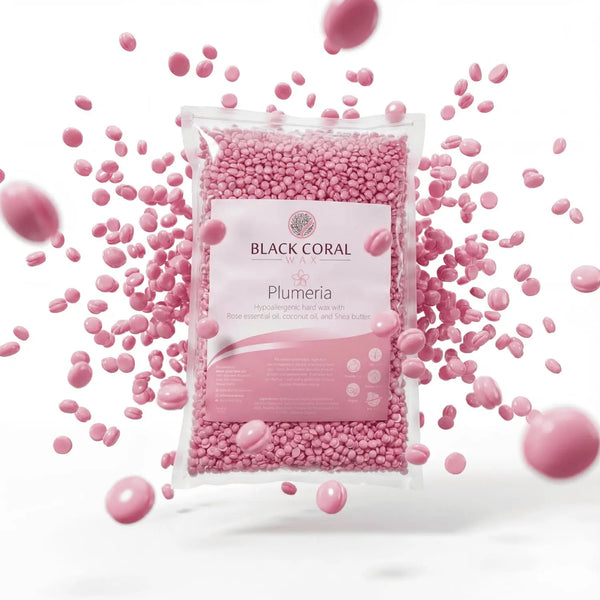
Black Coral's Pele and Plumeria formulas are examples of high-quality hard waxes that are made to "shrink-wrap" around the hair shaft. This means that the wax holds the hair tightly at the root without sticking too tightly to the skin.
This difference is very important for avoiding irritation. When wax pulls on the skin, it hurts and can cause redness, histamine reactions, and more bumps. Hard wax pulls hair out more cleanly and with less pain because it only grips the hair.
Key Insight: A good hard wax works well because it removes hair cleanly without bothering the skin. This greatly lowers the physical stress that causes inflammation after waxing.
Also, hard waxes that are made for professionals melt at a lower temperature. This means that they can be used at a more comfortable temperature, which lowers the risk of burns or heat irritation, especially for people with sensitive or reactive skin. It also has a flexible texture that lets it fit the body's natural curves for a perfect removal.
The Unchangeable Role of Professional Technique
Even the best wax won't work well if you don't use the right technique. A licensed professional has a level of knowledge that can't be replaced and has a direct effect on the health and comfort of your skin. Their training goes well beyond just putting on and taking off.
A good esthetician knows important things like how hair grows, how to make skin tension right, and how to apply products exactly. They know how to put wax on in the direction of hair growth and, most importantly, how to take it off the right way.
This is why their method is so important:
-
Correct Removal Angle: The wax should be pulled parallel to the skin, not straight up. Pulling away from the skin lifts and hurts it, making it more likely to bruise or get irritated.
-
To keep hair from breaking, use the right amount of pressure and take off the wax quickly at the right angle. This will make sure that the hair comes out from the root. Bad technique can break the hair at the surface, which is one of the main reasons for ingrown hairs.
-
Skin Support: A professional always keeps the skin taut while removing it. This easy step makes the lift much cleaner, less painful, and less likely to pull on the skin.
In the end, keeping bumps from forming after waxing is a team effort between a client who is committed to proper pre- and post-care, an esthetician who knows how to do it right, and a product that is good for the skin. When you think about your options, keep in mind that buying high-quality depilatory waxes is one of the best things you can do to get smooth, clear results every time.
When to See a Pro About Bumps That Won’t Go Away
Most minor bumps that appear after a wax are temporary and resolve with diligent aftercare. However, sometimes your skin may signal that it's time to consult a professional.
Trust your intuition. If something feels off or the irritation is worsening instead of improving, seeking professional advice is always the correct course of action.
Signs You Need to See a Professional
If you notice any of the following symptoms, it's time to pause at-home treatments and get an expert opinion. These could be signs of a more significant infection that requires proper care to prevent scarring.
Look out for these red flags:
-
The bumps persist for more than a week without improvement.
-
You are experiencing increasing pain, tenderness, or swelling.
-
There is significant pus, especially if it is yellow or green.
-
The redness is spreading beyond the waxed area.
-
The skin feels hot to the touch, a classic sign of infection.
Ignoring these warnings can escalate a minor issue. Prompt action is key to maintaining your skin's health.
Your First Call: The Esthetician
Your esthetician should be your first point of contact. They are trained to understand skin reactions to waxing and can assess whether your condition is a normal response or something more serious. They can recommend professional-grade products and treatment protocols.
An experienced esthetician can often differentiate between a standard reaction and the onset of a complication. Their guidance can save you discomfort and help prevent potential scarring by putting you on the right path immediately.
When to Take it to a Dermatologist
If your esthetician's recommendations do not resolve the issue, or if the symptoms are severe from the outset, it is time to see a dermatologist. As medical doctors specializing in skin, dermatologists can diagnose and treat persistent infections.
They may prescribe stronger topical creams or oral medications to resolve the problem effectively. Taking this step demonstrates a commitment to your skin's long-term health and provides a clear plan for managing any concerns about bumps after waxing.
Your Post-Wax Questions, Answered
Have questions about post-wax bumps? You're not alone. Here are concise, professional answers to the most common concerns, helping you manage your aftercare with confidence.
How Long Do Bumps After Waxing Usually Last?
For most individuals, initial redness and minor histamine bumps will subside within a few hours to 24 hours. This is the skin's immediate inflammatory response and is typically short-lived.
If you are dealing with mild folliculitis, those bumps might appear 2-3 days later and persist for several days. If irritation lasts for more than a week or becomes painful, it is advisable to contact your esthetician.
Can I Pop the Pimples That Appear After Waxing?
No. Squeezing or popping post-wax bumps can worsen the situation significantly. You risk pushing bacteria deeper into the follicle, which can intensify inflammation and lead to a more severe breakout, potential scarring, or post-inflammatory hyperpigmentation (dark spots).
Instead of picking, focus on keeping the area clean and applying a targeted post-wax treatment. This will calm the skin and allow it to heal properly without intervention.
Professional Takeaway: Squeezing bumps traumatizes the skin and can turn a temporary issue into a long-term concern. Gentle care is always the superior approach.
Is It Normal to Get Bumps Every Time I Wax?
While some skin types are naturally more reactive, experiencing a significant breakout after every wax is not something you should simply accept. It often indicates that your pre- or post-care routine needs adjustment, or that the wax being used is not suitable for your skin.
If bumps are a recurring issue, your skin may require more thorough preparation or a different aftercare strategy. Simple changes, like incorporating gentle exfoliation between appointments or switching to a high-quality hard wax formulated for sensitive skin, can often resolve the problem.
What Is the Best Product to Use Immediately After Waxing?
Immediately after waxing, your skin is vulnerable and your pores are open. The ideal product is calming, antimicrobial, and non-comedogenic—meaning it will not clog pores. The goal is to soothe irritation while protecting the skin from bacteria.
A professional post-wax oil or serum is your best choice. Look for formulas with gentle yet effective ingredients like chamomile, tea tree, or lavender to reduce redness and keep follicles clear. Using a product specifically designed for aftercare ensures your skin receives precisely what it needs to begin the healing process.
At Black Coral Wax, we understand that a flawless finish is achieved with superior products. Our professional-grade waxes and aftercare are formulated to minimize irritation and deliver exceptionally smooth, healthy skin.
Explore our collections and discover the right formula for your needs.