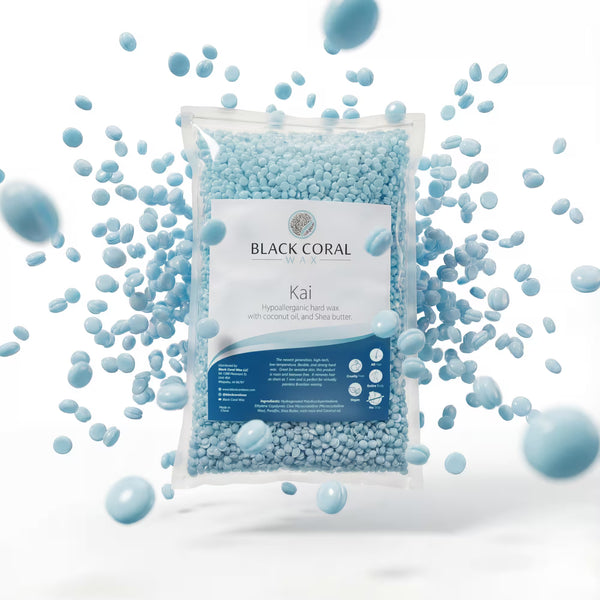
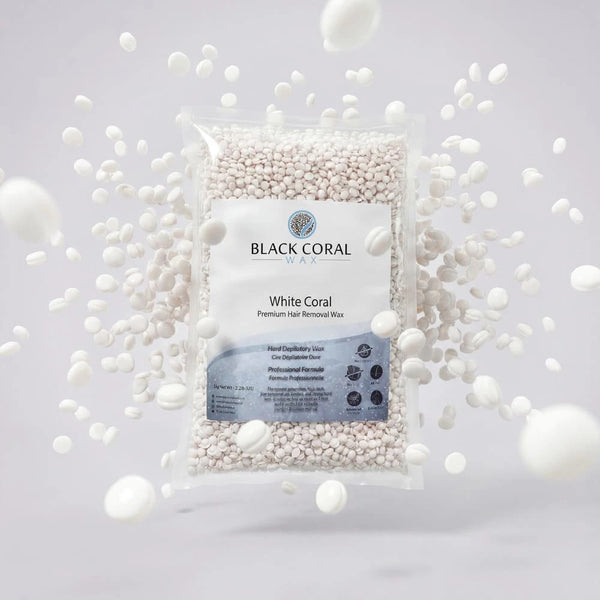
Choosing the Best Salon Waxing Products for Your Business
This guide serves as your professional resource for selecting products that truly perform. We will break down exactly what to look for to achieve incredible results, earn client trust, and establish your salon as the go-to destination for waxing services.
Your professional toolkit primarily features two main categories: hard wax and soft wax. Every professional salon needs both, and knowing when to use each one is what separates an expert from an amateur.
Hard Wax vs Soft Wax at a Glance
A premium waxing service begins with selecting the right tool for the job. This quick comparison of the core differences between hard and soft wax will help you prepare for any client or service.
|
Feature
|
Hard Wax (Stripless)
|
Soft Wax (Strip)
|
|
Best For
|
Sensitive skin & delicate areas (Brazilian, face, underarms).
|
Large body areas (legs, arms, back, chest).
|
|
Removal Method
|
Hardens and is removed on its own, no strip needed.
|
Requires a non-woven or muslin strip to be removed.
|
|
Adhesion
|
Adheres only to the hair, not the skin.
|
Adheres to both the hair and the top layer of skin.
|
|
Application
|
Applied slightly thicker, creating a "lip" to grip for removal.
|
Applied in a very thin, even layer.
|
The main distinction is simple: hard wax is designed for client comfort. It adheres only to the hair, which is why it is the superior choice for sensitive areas. Soft wax, conversely, is your workhorse for speed and efficiency on larger, less delicate areas.
Understanding these details is fundamental to choosing the best salon waxing products. In the following sections, we will explore their performance characteristics more deeply so you can build a wax collection that works for your practice. Knowing precisely when and why to use each type will make every service safer, more comfortable, and more effective for every client who walks through your door.
Hard Wax vs Soft Wax: A Professional Comparison
The first significant decision every esthetician makes is choosing between hard wax and soft wax. While any full-service salon requires both, truly understanding their performance is what distinguishes a good wax from a great one. This is not merely about pros and cons; it is about knowing which wax to select for each client to achieve the best results with the least discomfort.
Hard wax, also known as stripless wax, is a game-changer because it adheres only to the hair, not the skin. This quality makes it your ideal partner for sensitive areas. On the other hand, soft wax, or strip wax, requires a muslin or pellon strip for removal and is focused on efficiency for large areas.
It is clear where the industry is heading. The global hair removal wax market is projected to grow by USD 436.4 million between 2023 and 2028, a jump of 9.44%. What's truly telling is that hard wax held the largest market share in 2022, demonstrating a significant professional shift toward its gentle yet powerful grip.
To help you decide which wax is right for your services, let’s break down their performance head-to-head.
Professional Performance Hard Wax vs Soft Wax
|
Performance Metric
|
Hard Wax (Stripless)
|
Soft Wax (Strip Wax)
|
|
Best For
|
Sensitive skin, coarse hair (Brazilian, underarms, face)
|
Less sensitive skin, fine-to-medium hair (legs, arms, back)
|
|
Application
|
Thicker layer, shrink-wraps the hair, removed on its own
|
Thin layer, adheres to skin and hair, needs a strip for removal
|
|
Pain Level
|
Lower, as it doesn't pull on the skin
|
Higher, as it adheres to and exfoliates the skin
|
|
Residue
|
Minimal, non-sticky, easily cleaned with pre-wax oil
|
Can be sticky, requires a post-wax oil-based remover
|
|
Reapplication
|
Can be reapplied to the same area for stubborn hairs
|
Cannot be reapplied; high risk of skin lifting
|
|
Efficiency
|
Slower application, ideal for precision and small areas
|
Fast and efficient, ideal for speed on large body parts
|
Ultimately, having both types of wax in your salon is non-negotiable. This table shows you are not just choosing a product; you are choosing the right tool for a specific job to give your client the best, most comfortable experience.
Application and Technique
How you apply each wax is entirely different, and it directly affects your client’s comfort and your own workflow.
Hard Wax Application:
-
You will apply it in a thicker, more generous layer, spreading with the hair growth and often swirling it back to capture every hair.
-
The key is creating a small "lip" or thicker edge at the end of your strip. This provides a clean, easy spot to grip for removal.
-
This technique offers incredible control, which is why it is perfect for detailed work like shaping eyebrows or navigating the bikini line.
Soft Wax Application:
-
This wax is applied in a very thin, even layer, always in the direction of hair growth. You want maximum coverage with minimal product.
-
A fabric strip (muslin or pellon) is immediately placed over the wax and pressed down firmly.
-
Removal is fast and covers a large area, which is what makes it so efficient for a full leg or back wax.
Hard wax is about technique and precision; it is a methodical process. Soft wax is built for speed and efficiency over large areas.
Mastering these two techniques is essential. If a hard wax strip is too thin, it will crack and break. If a soft wax layer is too thick, it will leave a sticky residue and not pull cleanly. If you need a refresher, our guide on how to properly use hard wax offers a detailed walkthrough.
Suitability for Hair and Skin Types
The best estheticians know how to match the wax not just to the body part, but to the client's unique skin and hair type.
Hard wax is the undisputed champion for coarse, thick, or stubborn hair. As it cools, it shrink-wraps around each strand, creating a powerful grip that extracts dense hair from the root without tugging the surrounding skin. That is precisely why it is the standard for Brazilian and underarm waxing services.
Its gentle formula is also the safest choice for clients with sensitive, reactive, or mature skin. Because it does not adhere to the skin, you dramatically lower the risk of lifting, irritation, and prolonged redness.
Soft wax, on the other hand, is fantastic for clearing fine to medium hair on less sensitive areas. It excels at grabbing soft vellus hair (or "peach fuzz") and provides a light exfoliation by removing the top layer of dead skin cells. This is what leaves arms and legs feeling exceptionally smooth.
However, because it adheres directly to the skin, you should never reapply it over the same spot in one session. Doing so can cause significant irritation or even lift the skin. For clients who are extra sensitive, even on their legs, a quality hard wax might still be the better, more comfortable choice. A smart esthetician always has both ready to go.
What Really Matters: Key Performance Metrics in a Professional Wax
When you are running a busy salon, you know that not all waxes are created equal. It goes beyond just hard versus soft wax. The real difference between a decent wax and a truly great one comes down to how it performs under pressure, service after service.
For a professional, consistency is everything. You need a wax that you can trust to deliver the same flawless results every single time. Understanding a few key performance metrics is what separates a wax that just works from one you can build your reputation on.
Melting Point and Client Safety
A wax’s melting point is perhaps the most critical factor for both client safety and comfort. Consider this-the first thing a client feels is the temperature. High-quality waxes are formulated to melt at lower temperatures, which is a significant factor in minimizing the risk of burns and reducing skin inflammation.
This low-temperature application makes the entire experience more comfortable, especially on highly sensitive areas like the face, underarms, and bikini line.
A low melting point is not just a "nice-to-have" feature; it is non-negotiable for any professional-grade wax. It signals that the formula is advanced and was designed with skin health as the top priority.
Waxes that must be extremely hot can cause serious discomfort and even lead to post-inflammatory hyperpigmentation. Choosing a low-temperature formula shows your clients you are committed to their safety and a premium experience. If you want to dive deeper, you can learn all about how to avoid common waxing temperature mistakes in our guide. Getting this right ensures every application is as gentle as it is effective.
Set Time and Service Efficiency
In a packed salon, time is money. The set time-how long it takes for a hard wax to cool enough for removal-has a direct impact on your schedule. A wax with a quick but predictable set time allows you to work confidently and efficiently, moving from one section to the next without awkward pauses.
If a formula sets too slowly, it can disrupt your entire day. But if it sets too quickly, it can become brittle and crack before you are ready to pull. The sweet spot is a wax that gives you just enough time to lay a perfect strip but hardens quickly so you can keep your workflow moving. This is especially vital for high-volume services like Brazilians, where efficiency is key to profitability.
Grip Strength and Flexibility
Finally, it all comes down to the pull. The combination of grip strength and flexibility is what determines whether you achieve a clean, flawless result or a frustrating, patchy one.
-
Grip Strength: A top-tier wax needs the power to "shrink-wrap" around and grab every single hair-from the finest, fluffiest vellus hairs to the most coarse, stubborn ones. A strong grip means hair is pulled cleanly from the root, which prevents breakage and saves you from having to tweeze or re-wax a spot.
-
Flexibility: Once the wax is set, it must remain pliable. A flexible wax will not crack, break, or become brittle when you go to remove it. This is what allows you to remove the entire strip in one clean, satisfying pull, which is far more comfortable for your client and leaves almost no residue behind.
A wax that has mastered both grip and flexibility is the holy grail for any serious esthetician. It provides the strength you need for a thorough service while staying elastic enough for a gentle, efficient pull.
How to Match the Right Wax to Every Client Service
Any seasoned esthetician knows that using the same wax for every service is a rookie mistake. A one-wax-fits-all approach simply will not suffice when clients expect comfort, precision, and flawless results. The true mark of a professional is having a strategic inventory of both premium hard and soft waxes, ready for any request that comes through the door.
This demonstrates to your clients that you know exactly what you are doing. It proves you understand the different needs of each body area, from delicate facial skin to coarse, stubborn hair, and builds the kind of trust that keeps them coming back.
Precision Services: Facial Waxing
When it comes to facial waxing-brows, upper lip, chin-there is no room for error. This is where precision is paramount. The skin is delicate and on full display, so a gentle, pliable hard wax is not just a good idea; it is the only professional choice.
A quality hard wax for the face needs a few specific qualities:
-
Low Melting Point: This is essential for client comfort. A cooler wax prevents the redness and irritation that can easily flare up on sensitive facial skin.
-
Excellent Pliability: The wax must be flexible enough to wrap around the tiny contours of the face, like a brow arch, without cracking or becoming brittle.
-
Targeted Grip: It needs to grab onto everything from fine vellus "peach fuzz" to coarse brow hairs, all while leaving the skin itself untouched.
Using a great hard wax here dramatically reduces the risk of skin lifting or post-wax breakouts. It ensures a clean, sharp result your clients will feel confident about. It is a huge part of the market for a reason-facial waxing consistently holds the top spot in professional hair removal and is expected to stay there.
Sensitive Areas: Brazilian and Underarm Waxing
For intimate services like Brazilians and underarms, comfort and effectiveness are the top priorities. These areas are notoriously sensitive, and the hair is often coarse, dense, and stubborn. Once again, this is a job that calls for a high-performance hard wax.
For Brazilian and underarm services, the goal is maximum grip with minimum skin contact. A flexible, polymer-based hard wax can shrink-wrap around coarse hair at the root, ensuring a cleaner pull with significantly less pain.
The best wax for these services is one that stays elastic even after it sets. This flexibility prevents the wax strip from breaking upon removal-a common problem that is both painful and leaves hair behind. A formula that works at a low temperature is also key to protecting the delicate skin in these areas.
Large Areas: Legs, Arms, and Back
When you are working on large body areas like the legs, arms, or back, efficiency is the name of the game. While you can use hard wax, a high-quality soft wax (also called strip wax) is usually the more practical choice. It allows you to cover a lot of ground quickly, keeping your workflow smooth and your appointments on schedule.
A professional soft wax enables you to apply product over a large surface and remove it all with a single strip. It is perfect for clearing fine to medium hair in a fraction of the time. Just be sure you are choosing a premium soft wax, as it does adhere to the top layer of skin, and a cheap formula can cause unnecessary irritation.
For estheticians who want to work even faster, a roll-on wax system is an excellent tool. The cartridges dispense a perfectly thin, even layer of soft wax, which cuts down on both application time and product waste. To dive deeper into which formulas work best where, check out our guide on the various types of wax and their uses.
In the end, the smartest setup is a hybrid one. By stocking the best salon waxing products in both hard and soft wax formulas, you are always prepared to give every client a safe, effective, and completely customized service, no matter what they book.
Calming and Protecting With Post-Wax Solutions
What you do after the wax is just as important. The skin is sensitive and the follicles are open, making it a prime time for irritation and bacteria to enter. Professional aftercare products are specifically formulated to calm inflammation immediately and protect the skin as it recovers.
A good post-wax oil is designed to dissolve any residual wax without aggressive rubbing. More importantly, it soothes the skin with nourishing ingredients, helping to reduce redness and inflammation almost instantly. Formulas with natural anti-inflammatory oils are perfect for this.
Enhancing Skin Recovery and Client Trust
For a more intensive treatment, a post-wax soothing lotion or gel provides a cooling sensation and deep hydration. These products often help restore the skin’s natural pH balance, which can be disrupted during waxing. Using them is one of the best ways to prevent post-wax bumps or ingrown hairs.
You can check out our complete guide to find the perfect after-waxing care products to stock in your salon.
When you use a full pre- and post-wax system, you are not just providing a service-you are delivering a professional skin treatment. This not only guarantees better, longer-lasting results but also gives you an opportunity to educate clients on home care. It builds their trust and positions you as an expert who cares about their skin from start to finish.
Smart Inventory Management for Your Salon
How you manage your inventory is one of the biggest factors in your salon's bottom line. A smart approach to purchasing your waxing supplies means you always have the best salon waxing products on hand for every client, without tying up cash in excess back stock. It is all about finding the sweet spot between being prepared and being financially savvy.
The first step is to determine your actual usage rates. Start tracking how much product you use over a few weeks. Note how many of each service you perform and the average amount of wax it takes. This data allows you to predict your monthly needs and add a small buffer for unexpectedly busy weeks.
Optimizing Your Purchasing Strategy
Buying in bulk is almost always a good financial decision. When you find a great supplier with wholesale pricing, your cost-per-service drops, which directly impacts your profit margin. This is especially true for the products you use every day, like your go-to hard wax beads or soft wax tins.
But smart purchasing is not just about getting the lowest price; it is also about finding a supplier you can rely on. A dependable partner with fast, reliable shipping lets you keep less stock on your shelves, freeing up your cash flow. You will never have that moment of panic when you realize you are running low on a client favorite.
The real goal is to build a supply chain that just works, supporting your salon's day-to-day operations without causing financial strain. This keeps your product quality and availability consistently high.
The global cosmetic wax market is a great indicator of our industry's health and growth. It was valued at USD 16.9 billion in 2025 and is expected to hit USD 31.3 billion by 2035. This growth shows just how important it is to partner with brands that are serious about quality and efficiency.
Storage and Handling Best Practices
Proper storage is non-negotiable for keeping your wax products performing at their best. Always store your waxes in a cool, dry place away from any direct sunlight, which can alter their consistency and effectiveness. Keeping your wax warmers clean also extends the life of your equipment and ensures every service is perfectly hygienic.
-
Organize by Type: Keep your hard wax, soft wax, and roll-on cartridges in separate, clearly labeled areas so you can grab what you need quickly.
-
First-In, First-Out (FIFO): This is a simple rule-always use your oldest stock first. It prevents products from sitting on the shelf past their prime.
-
Monitor Expiration Dates: Get in the habit of checking dates on your pre- and post-care products. Their active ingredients can become less effective over time.
For an even deeper dive into the logistics of handling salon supplies, looking into topics like beauty products fulfillment can give you some great insights into professional storage and distribution. This kind of knowledge helps your salon run like a well-oiled machine, from the moment you order to the final application. For more tips created just for estheticians, check out our guide to professional waxing supplies.
Common Questions About Salon Waxing Products
As you grow in your career, you will always have questions about achieving the best results for your clients. Choosing the right salon waxing products is a huge part of that, and it is normal to wonder about specific situations and best practices.
Let's break down some of the most common questions estheticians ask. Getting these answers right will help you make better decisions and truly elevate your services.
What Should I Look For In A Hard Wax For Sensitive Skin?
When you are working with clients who have sensitive skin, two things matter most: a low melting point and a hypoallergenic formula.
A wax that melts at a lower temperature is a game-changer. It feels much more comfortable on the skin and significantly reduces the risk of burns or post-service inflammation.
You also want a high-quality, hypoallergenic formula made without common irritants like rosins. The purpose of a great hard wax is that it should shrink-wrap the hair, not the skin. This is what prevents skin lifting and makes the removal process much less painful, especially for those prone to sensitivity.
Is It Efficient To Use Hard Wax On Large Body Areas?
You can use hard wax on large areas like legs or a back, but it is not the most efficient choice for a packed schedule.
Soft wax (or strip wax) is designed for speed on large areas. You can apply a large strip and remove it with one quick motion, which dramatically cuts down your service time. This means you can see more clients in a day.
The professional standard is to use soft wax for speed and efficiency on large, less sensitive areas. However, for clients with exceptionally reactive or sensitive skin, a high-quality hard wax may still be the most comfortable and appropriate choice, even if it takes longer.
Ultimately, being a professional means mastering both techniques. Having both skills in your toolkit ensures you can handle any client's needs, keeping them comfortable while still managing your schedule effectively.
How Do I Accurately Estimate My Monthly Wax Needs?
Figuring out how much product to order is all about smart inventory management. The best way to do this is to start by tracking your usage over a 2- to 4-week period.
Here’s how to do it:
-
Log Your Services: Keep a simple list of every wax service you perform (e.g., 20 Brazilians, 15 full legs, 30 brows).
-
Measure Your Usage: Get a sense of how much wax each service typically uses. For example, a Brazilian might take around 115 to 170 grams of hard wax, while you will use a certain amount of soft wax for a full leg.
-
Project and Add a Buffer: Use this data to estimate what you will need for a full month. Then, add a 15-20% buffer to your order. This extra amount covers you for busy weeks, walk-ins, or small spills.
This simple tracking system takes the guesswork out of ordering. It helps you control your costs and, most importantly, ensures you never run out of the products your clients count on.
Ready to stock your salon with products that deliver consistent, professional results? At Black Coral Wax, we provide premium, lab-tested formulas designed for performance and client comfort. Explore our complete collections and find the perfect wax for your business at Black Coral Wax.