The Hair Removal Market Is Growing
The need for professional hair removal is growing and stronger than ever. In 2025, the global market for hair removal wax was worth $4,270 million. North America was the biggest market because beauty standards are changing and people are spending more on self-care.
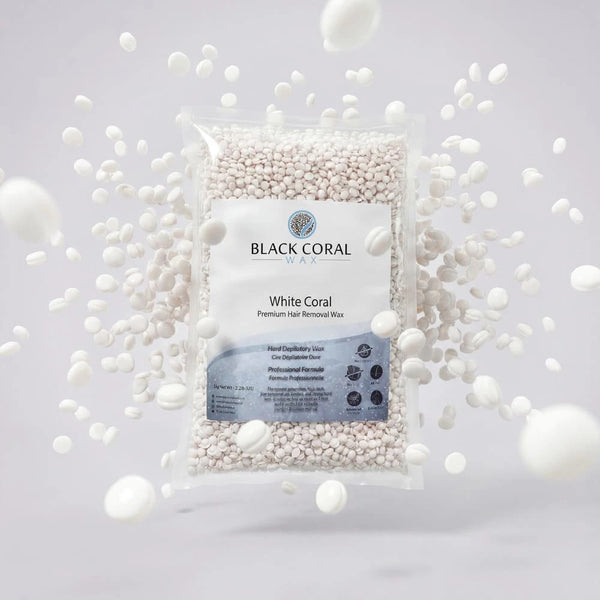
This growth is a big chance for professionals. You can give better services and make your clients more comfortable by using high-quality products like Black Coral's Hawaiian-formulated hard waxes, which are trusted by more than 10,000 estheticians.
Managing appointments becomes more important as your client base grows. Finding the best salon booking software can make things run much more smoothly, letting you concentrate on what you do best.
If you know how to do both waxing and threading well, you can provide better service, meet more of your clients' needs, and make more money and build your salon's reputation. To learn more, read our guide on how to choose between threading and waxing for different types of clients.
Learning the Skills of Professional Waxing
Being a good wax technician means more than just getting rid of hair. It's a skill that requires a deep understanding of skin science and how to make products. When you get good at it, it turns a regular service into a luxury experience that leaves clients with smooth, beautiful skin and full faith in your skills.
Every step is important, from choosing the right wax to applying it perfectly.
Choosing the right tool for the job is the most important part of any professional waxing service. You have two main types of wax in your toolkit: hard wax and soft wax. You can't use them interchangeably. Each one is made for a certain part of the body, hair type, and skin sensitivity, so choosing the right one is a very important first step in getting good service.
A Professional Chooses Between Hard Wax and Soft Wax
It is very important for any esthetician to know the main differences between hard wax and soft wax. This choice has a direct effect on how comfortable your client is, how well your workflow works, and how their skin looks and feels in the end.
Hard Wax: The Best Choice for Sensitive Areas
Think of hard wax as your fine-tuning tool for delicate tasks. When you put it on, it cools and "shrink-wraps" around the hair, not the skin. This special quality makes it the best choice for sensitive areas where the skin is thinner and more likely to get irritated.
Professionals who work on the face, underarms, and bikini or Brazilian areas use hard wax. Because it sticks mostly to the hair, it hurts a lot less to take off, which means less redness and a much lower chance of skin lifting.
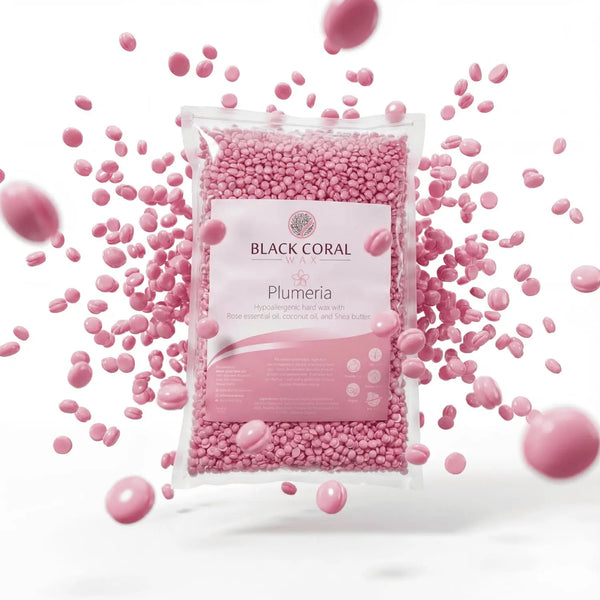
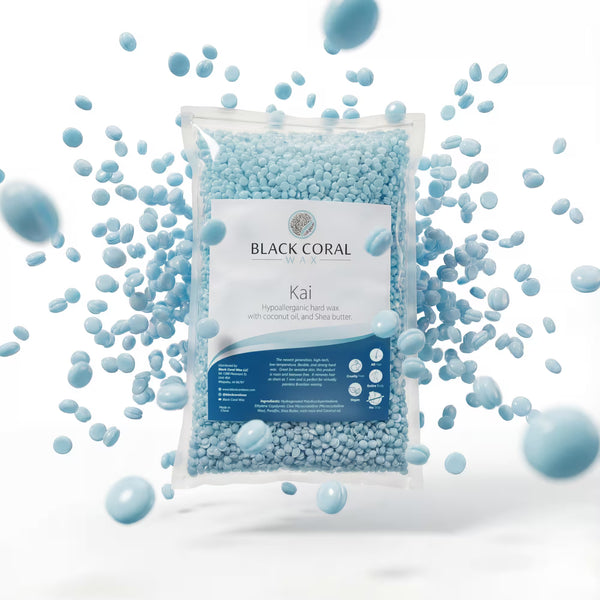
Black Coral Wax and other high-quality hard waxes are made with low melting points. This makes sure that the wax is applied at a comfortable temperature, which improves the client's experience and helps prevent burns. When it dries, the wax strip comes off on its own, leaving a clean, sharp pull.
Soft Wax: The Workhorse for Large Areas
Soft wax, also known as strip wax, is your efficient workhorse for larger, less sensitive body areas. It’s applied in a very thin layer and removed with a non-woven strip. Its smooth consistency allows you to cover broad sections of skin quickly, making it perfect for services like leg, arm, and back waxing.
While incredibly effective at grabbing both fine and coarse hair, soft wax adheres to both the hair and the top layer of skin. This provides light exfoliation but also means you should never reapply it to the same spot in a single session. Doing so can easily lead to irritation or skin lifting.
|
Feature
|
Hard Wax (Stripless Wax)
|
Soft Wax (Strip Wax)
|
|
Best For
|
Face, underarms, bikini, Brazilian
|
Legs, arms, back, chest
|
|
Application
|
Thicker layer, sets and is removed on its own
|
Thin layer, removed with a strip
|
|
Adhesion
|
Adheres primarily to hair, not skin
|
Adheres to both hair and skin
|
|
Pain Level
|
Generally less painful, ideal for sensitive skin
|
Can be more intense due to skin adhesion
|
|
Reapplication
|
Can be reapplied to the same spot if needed
|
Never reapply to the same area in one session
|
The Professional Waxing Workflow
A consistent, professional workflow is your secret weapon for ensuring safety, efficiency, and outstanding results every time. This is not just about hair removal; it is a complete skin treatment that prioritizes skin health from start to finish.
Here is a proven step-by-step workflow that top professionals trust:
-
Client Consultation and Skin Analysis: Always begin by speaking with your client. Ask about their skin history, any allergies, and check for contraindications like retinoid use. Then, examine the area you’ll be waxing to identify any irritation, breakouts, or sunburn.
-
Meticulous Skin Preparation: Cleanse the skin with a quality pre-wax cleanser. This is key for removing oils, sweat, or lotions that can interfere with wax adhesion. For extra-sensitive skin, a light layer of pre-wax oil creates an additional protective barrier, especially when using hard wax.
-
Precise Wax Application: Following the manufacturer’s instructions, spread the wax evenly in the direction of hair growth. Pay attention to your edges-clean application edges provide a solid grip for a clean removal.
-
Clean and Swift Removal: For hard wax, allow it to set completely, create a small "lip" to grip, and pull firmly against the direction of hair growth. For soft wax, press the cloth strip down firmly, hold the skin taut with your other hand, and pull parallel to the skin-never upwards.
-
Essential Post-Wax Care: The moment the wax is removed, apply gentle pressure to the area with your hand to instantly soothe nerve endings. Follow up with a post-wax oil to dissolve any residue and finish with a calming lotion to reduce redness and hydrate the skin, leaving it feeling comfortable and smooth.
Understanding The Precision of Threading
While waxing is a powerhouse for clearing large areas efficiently, threading is a distinct art form. This ancient technique, with deep roots in Asia, has become an essential skill for any esthetician dedicated to creating flawless facial results-especially for picture-perfect brows. Offering this service demonstrates a comprehensive approach to hair removal.
The technique appears intricate but is based on a simple principle that requires practice to master. A single piece of cotton thread is twisted and rolled along the skin. This rolling motion forms a tiny lasso that catches unwanted hairs and pulls them cleanly from the follicle. Unlike tweezing one hair at a time, threading can remove an entire line of hair at once, enabling impossibly straight lines and razor-sharp arches.
The Chemical-Free Advantage
One of the most significant benefits of threading is that it is 100% chemical-free. The only thing touching the client’s skin is a piece of cotton thread. This makes it the safest choice for clients with extremely sensitive, fragile, or reactive skin.
For clients on medications that increase skin sensitivity-like retinoids, Accutane, or certain antibiotics-threading is often the only safe option. Waxing can lift compromised skin, but threading has minimal contact, dramatically reducing the risk of irritation.
Offering this service builds incredible trust. You become the go-to expert for clients who may have been turned away from other hair removal methods, earning their long-term loyalty.
Mastering Technique And Hygiene
While the benefits are clear, the learning curve requires dedication. It takes time and practice to develop the dexterity needed to control the thread with both speed and precision. Client comfort is also paramount. The sensation is often described as a series of quick, tiny pinches, and a skilled professional learns to work quickly while maintaining the right thread tension to make the experience as comfortable as possible.
Hygiene is absolutely non-negotiable. A new, clean piece of thread must be used for every client, and you will likely use several threads in a single appointment. This one-client, one-thread rule is the foundation of professional threading and guarantees zero risk of cross-contamination.
-
Precision: Threading can remove a single hair or an entire line, creating sharp, clean edges that are difficult to achieve with wax.
-
Safety: With no heat and no chemicals, the risk of burns, reactions, or skin lifting is virtually zero, making it perfect for the delicate eye area.
-
Hygiene: Using a disposable thread for each client makes it one of the most hygienic hair removal services you can offer.
Threading vs. Waxing For Eyebrows
When clients ask about threading versus waxing for their brows, the conversation is about choosing the right tool for the job. Waxing is excellent for quickly clearing the space between the brows (the glabella) and for general cleanup. However, for creating a truly sculpted, defined arch with meticulous detail, threading is the undisputed champion.
Many professionals find that a combination service yields the best results. For instance, you could wax between the brows for speed and then switch to threading to perfect the arch and tail. Mastering both allows you to offer a truly custom brow service. For a deeper look, you may find our The Ultimate Guide to Eyebrow Shaping & Waxing helpful. Adding threading to your menu positions you as a high-end, full-service expert committed to your craft.
How to Choose the Right Hair Removal Method
Deciding between waxing and threading is more than listing pros and cons; it’s about acting as an expert consultant who can assess a client’s skin, hair, and goals to make the perfect recommendation. When you can confidently explain why one method is better for a specific situation, you build incredible trust and demonstrate a genuine commitment to their skin's well-being.
This is what elevates a good service to a great one. You transition from technician to trusted advisor, ensuring your client receives the safest, most comfortable, and most effective treatment every time.
The Four Key Considerations
An expert recommendation is based on four factors: the body area, the client's hair type, their skin's condition, and their desired result. By evaluating all four together, you can create a customized plan that leads to beautiful results and a happy, loyal client.
-
Body Area: Are you working on a large, open area or a small, detailed one?
-
Hair Type: Is the hair fine and vellus, or is it coarse and stubborn?
-
Skin Condition: Is the skin resilient, or is it sensitive, reactive, or compromised by medication?
-
Desired Result: Does the client want an efficient cleanup or meticulous shaping?
Let's break down how these factors guide your choice.
Analyzing the Body Area
The treatment area itself is often the biggest indicator. Different parts of the body have different needs.
For large areas like the back, legs, or chest, efficiency is paramount. Attempting to thread a full leg would be highly impractical. This is where waxing is the clear winner, especially a high-quality soft wax. It allows you to cover a lot of ground quickly, making it the go-to choice for large-scale body services.
Conversely, for small, delicate areas that demand precision, threading is an artist’s best tool.
Threading is the absolute gold standard for sculpting eyebrows into sharp, defined arches. You can grab single hairs with incredible accuracy, creating clean lines that are nearly impossible to achieve with wax. It's also a fantastic option for the upper lip or chin, where detail is critical.
Assessing Hair and Skin Type
Next, you need to assess the client's hair and skin. A client with thick, coarse leg hair requires a different approach than someone with fine, vellus hair on their face.
Thick, coarse hair is a perfect match for a quality hard wax. A premium hard wax will "shrink-wrap" around each hair, pulling it cleanly from the root without aggressively sticking to the skin. This makes it a much more comfortable and effective solution for sensitive areas like a Brazilian or underarms.
For clients with highly reactive or sensitive facial skin, threading is often the safer choice. Since there is no heat and the thread barely touches the skin, the risk of redness, swelling, or irritation is significantly lower. It is the ideal choice for anyone prone to facial breakouts post-wax.
A thorough consultation always includes asking about medications. Clients using retinoids (like Retin-A) or Accutane have compromised skin that is extremely prone to lifting during a wax. For these clients, waxing is contraindicated, making threading the only safe and responsible option for facial hair removal. Knowing such details is what separates a true expert from a novice. For a comparison of waxing to other methods, see our article on waxing vs. shaving and which offers better results.
Aligning with the Desired Result
Lastly, what does your client want to get out of this? Your final recommendation should be based on their end goal. Waxing can be a quick and effective way to clean up the whole face for someone with tough skin.
But if a client wants perfectly shaped, high-definition brows, you should tell them to get threading. You set clear expectations and give them a result that perfectly matches their vision by explaining how the technique gives them an unmatched level of detail. This expert help is what makes a first-time visitor a lifelong customer.
Care Before and After for Perfect Results
You don't just get great hair removal results in the treatment room. They start before the client gets there and go on long after they leave. Being able to do pre- and post-care for both waxing and threading is not an extra skill; it's a necessary part of being a professional. By teaching your clients how to take care of their skin, you can avoid problems, get better results, and strengthen your reputation as an expert.
Taking care of your skin before, during, and after shows that you are really committed to its health. This makes people loyal, gets them to come back, and makes sure that everyone leaves with skin that is smooth and beautiful.
The Universal Checklist for Pre-Treatment
Proper skin care is important no matter if a client is getting a wax or a thread. Giving them a simple, clear checklist makes sure they are ready for the best possible outcome. Good preparation makes the wax or thread work better and cuts down on the chances of irritation by a lot.
Tell your clients to do these important things before their appointment:
-
Gently exfoliate: Ask them to gently exfoliate the area 24 to 48 hours before their appointment. This gets rid of dead skin cells, which makes hair removal easier and less likely to cause ingrown hairs later.
-
Arrive with Clean Skin: Their skin must be completely clean, with no lotions, oils, or deodorant on it. These products make a barrier on the skin that keeps wax from sticking properly and can make it harder for the thread to catch hairs.
-
Check the length of your hair (for waxing): For any waxing service, the hair should be about 6 mm long, which is about the length of a grain of rice. The wax can't hold onto it if it's too short. If the pull is too long, it can be more painful and less effective.
Professional Care After Waxing
The protocol has two main goals after waxing: to calm the skin right away and to keep it nourished to protect the smooth results. Your skin has been through a lot of stress, so your aftercare should focus on calming, hydrating, and protecting it.
The skin is most sensitive right after waxing. Your main goal is to lower redness and swelling while making a barrier that keeps bacteria out. This is where you really need professional-grade post-care products.
Use a high-quality, non-comedogenic post-wax oil to get rid of any leftover wax without clogging your pores. After that, use a calming lotion to lower redness and add moisture.
Clients must stay away from the following for the first 24 hours after waxing:
-
Sun Exposure: Skin that has just been waxed is very likely to get sunburned and hyperpigmented.
-
Hot baths, saunas, and hot tubs: Heat can make irritation worse and give bacteria a place to grow in open follicles.
-
Intense workouts can make you sweat, which can irritate hair follicles and cause bumps or breakouts.
-
Tight clothes: Give your skin some air. Tight clothes rubbing against the skin is a big reason why people get irritated after waxing.
Simple and Effective Post-Threading Care
Since threading does not exfoliate the skin, aftercare is simpler but still important. The main goal is to keep the area clean, cool, and free of anything that could irritate the follicles as they close.
Advise clients to keep the threaded area clean and avoid touching it with their hands, which can transfer bacteria. A gentle swipe with a soothing toner like witch hazel or a light, fragrance-free moisturizer is often sufficient to calm any minor redness. Just like with waxing, they should also avoid heavy makeup, sun exposure, and strenuous activities for the remainder of the day to ensure the skin stays calm and clear.
Your Questions Answered: All About Waxing and Threading
As a professional, you are the expert your clients trust. Answering their questions with confidence is a crucial part of your role. Let’s review some of the most common questions you’ll hear about waxing and threading, so you can provide clear, reassuring answers every time.
Which One Hurts More?
This is often the first question, and the honest answer is: it depends. Everyone’s pain tolerance is different, but you can set expectations by explaining what each feels like.
Threading is a quick, repetitive sensation, often described as a series of tiny, fast tweezes. For some, it’s less intense than a wax pull; for others, the constant plucking can feel more irritating.
Waxing involves one swift pull. The discomfort is sharp but over in a moment. With modern wax formulations, the experience has been transformed.
Modern hard waxes are specifically engineered to be less painful. High-quality formulas, like those from Black Coral Wax, are designed to adhere only to the hair, not the skin. This “shrink-wrap” effect dramatically reduces the skin pulling that causes most of the discomfort.
How Long Will the Results Last?
Both waxing and threading are excellent because they remove hair directly from the root. This is why they provide longer-lasting results than methods like shaving, which only cuts hair at the skin’s surface.
Because the entire hair is removed from the follicle, you can inform clients that results for both methods typically last three to six weeks, depending on their individual hair growth cycle.
It is also a great opportunity to mention that with consistent appointments, many people find their hair grows back finer, softer, and sparser over time. This long-term benefit is a powerful motivator for clients to maintain a regular schedule with you.
Can a Client Get Both Waxing and Threading?
Absolutely. Offering a combination of the two is an excellent way to showcase your versatile skills. This "combo" service is a popular and highly effective strategy for achieving a perfect, clean finish. A thorough consultation is the ideal time to determine if this is the right approach for them.
Here is a popular and effective way to combine the methods:
-
Threading for Precision: Use threading to sculpt sharp, defined eyebrow lines. Its control is unmatched for creating the perfect arch and tail.
-
Waxing for Cleanup: Use a quality hard wax for quick and easy cleanup on the upper lip, chin, or the area between the brows (the glabella). It clears larger sections in a flash, saving time for both you and your client.
By using each technique for what it excels at, you deliver superior results and a truly customized experience.
What Are the Main Reasons Someone Shouldn’t Get a Service?
Client safety is your number one priority. A thorough intake form and a pre-service consultation are non-negotiable-they help you identify any contraindications that could put your client's skin at risk. Both waxing and threading have specific contraindications you must screen for.
Here are the primary contraindications to watch for:
-
Active Sunburn: Sunburned skin is damaged and inflamed. Any form of hair removal will be painful and can cause further injury.
-
Recent Peels or Microdermabrasion: These treatments leave the skin temporarily thinned and vulnerable. It is crucial to wait until the skin is fully healed before performing a hair removal service.
-
Use of Certain Medications: This is one of the most critical areas to inquire about.
-
Topical Retinoids: Products like Retin-A, Differin, and Tazorac thin the outer layer of skin, making it highly susceptible to lifting or tearing during a wax. For these clients, threading is a much safer option for the face.
-
Oral Medications: Powerful drugs like isotretinoin (commonly known as Accutane) make skin fragile systemically. Anyone on Accutane should avoid waxing completely for at least six months after finishing their treatment.
Identifying and respecting these contraindications not only protects your client but also proves you are a knowledgeable professional who prioritizes safety.
At Black Coral Wax, we are dedicated to supporting estheticians with products that deliver on safety, performance, and client comfort. Our advanced wax formulas are trusted by professionals to achieve outstanding results with every service.
Explore our collections to find the perfect wax for your studio and elevate your clients' experience. Discover more at Black Coral Wax.