

With the right technique and high-quality products, you can get an underarm wax at home that looks like it came from a salon. Using a high-quality hard wax that is made to stick to hair and not the delicate skin of the underarm area is the key to a comfortable and effective experience. This difference is very important for getting a clean, smooth result with as little irritation as possible.
Why Getting Your Underarms Waxed by a Professional at Home is the Best Option
Learning how to wax your own underarms at home gives you more than just convenience; it also gives you professional-level control over your grooming routine. Unlike shaving, which merely cuts hair at the skin’s surface and leads to rapid regrowth, waxing removes hair directly from the root.
This method leaves skin perfectly smooth and, over time, makes the hair follicle weaker. When you wax your hair regularly, it tends to grow back finer, softer, and less densely. This lets you have smooth underarms for three to four weeks, which is a big improvement over having to shave every day. If you want to improve your skills, you can always look into other beauty courses.
Putting together your professional waxing kit
A well-organized station is the first step to a successful waxing session. Getting your tools ready ahead of time makes sure that everything goes smoothly and keeps you from having to look for supplies in the middle of the application. A calm and methodical approach is key to getting a professional result.
This is the basic gear you need for a professional treatment:
-
A Good Wax Warmer: This is an essential tool for melting hard wax beads into a honey-like consistency that is safe and effective for use.
-
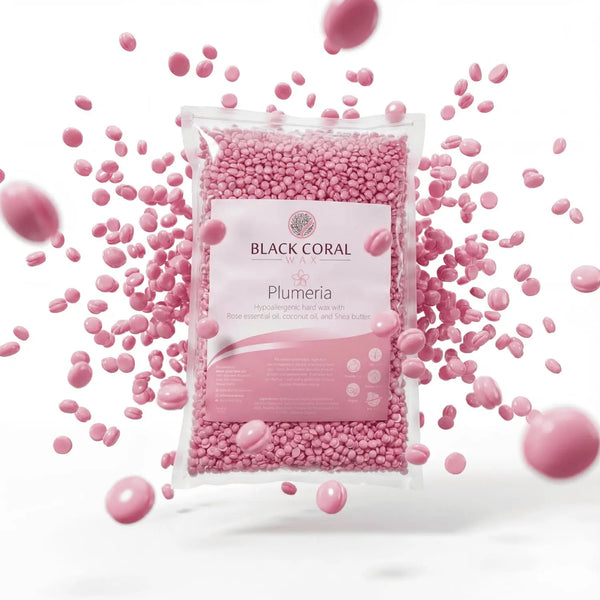
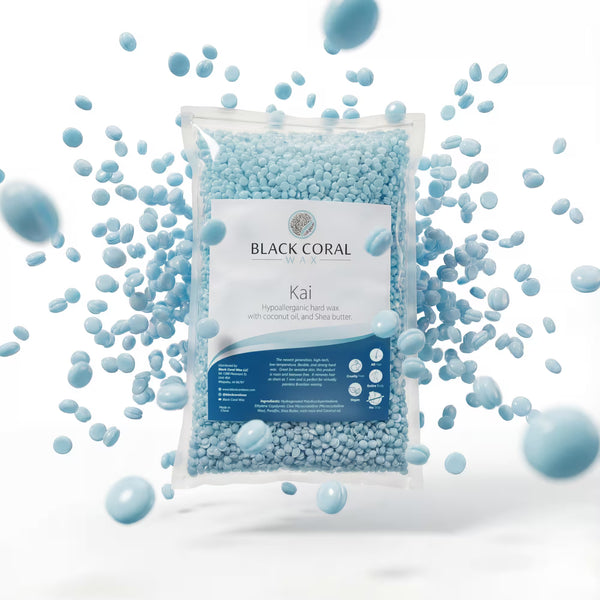
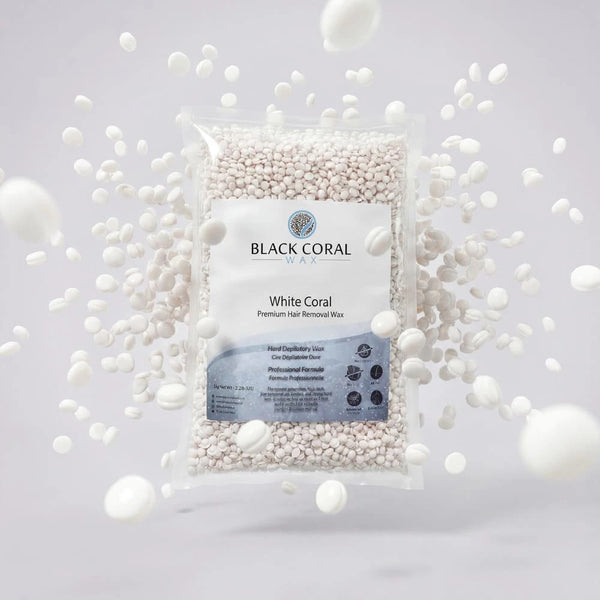
Black Coral Wax Hard Wax Beads: Our hard wax is made for people with sensitive skin and coarse hair, so it's perfect for the underarm area.
-
Pre-Wax Cleanser: It's very important that the surface is clean. This product gets rid of oils, sweat, and deodorant, which lets the wax stick to the hair better.
-
Applicator Sticks: Essential for precise, clean, and hygienic wax application.
-
This is an important last step: post-wax calming oil. It calms the skin right after hair removal and helps get rid of any leftover wax.
A well-prepared station is the foundation of a successful at-home wax. Having every tool ready minimizes stress and allows you to focus purely on your technique, ensuring a safer and more effective result.
For those new to at-home waxing, selecting the right supplies can feel complex. We offer a comprehensive guide on choosing the perfect waxing kit that simplifies the process. Establishing a professional setup is the first step toward achieving the flawless, long-lasting smoothness you desire.
Preparing Your Skin and Space for a Flawless Wax
A truly professional waxing outcome is determined by the preparation that occurs before the wax warmer is even activated. Achieving a perfectly smooth, salon-quality finish depends on methodical skin and workspace prep.
Dedicating time to preparing the skin and your environment is essential for minimizing discomfort, preventing irritation, and ensuring the wax adheres exclusively to the hair. This preparation sets the stage for a clean, efficient, and successful process.
The rise in at-home beauty treatments is well-documented. The global hair removal wax market was valued at US$ 10.19 billion in 2023. While soft wax (also known as strip wax) comprised 52.8% of the market in 2022, hard wax sales for home use have increased by 15% since 2020. This shift reflects a growing consumer understanding that hard wax is superior for sensitive areas like the underarms. You can find further market insights at FactMr.com.
This trend indicates that informed at-home users are increasingly choosing professional-grade products to achieve better results.
Your Essential Pre-Waxing Checklist
Follow this checklist to prepare your skin and workspace for a professional underarm wax. This foundational step significantly enhances the quality of your results.
|
Step |
Action Required |
Why It Matters |
|
Exfoliate |
Gently exfoliate your underarms 24 to 48 hours before waxing. |
Removes dead skin cells, allowing for a cleaner grip on the hair and helping to prevent future ingrown hairs. |
|
Cleanse |
Just before beginning, cleanse the underarms with a designated pre-wax cleanser. |
Eliminates deodorant, sweat, or oils that can interfere with wax adhesion, ensuring an effective treatment. |
|
Dry |
Pat the area completely dry. Moisture is a barrier to successful waxing. |
Wax requires a perfectly dry surface to adhere correctly. Even minimal dampness can cause patchy results. |
|
Check Hair Length |
Ensure hair is approximately 6 mm (1/4 inch) long, similar to a grain of rice. |
If hair is too short, the wax cannot grip it. If too long, removal can be more painful and may cause breakage instead of clean removal from the root. |
|
Set Up Your Space |
Lay down a protective towel on a clean, flat surface and arrange your warmer, applicators, and oils within easy reach. |
A clean, organized space prevents mess and allows for a focused, efficient process, improving both safety and outcomes. |
Following these steps will make your experience waxing your armpits at home much better.
Setting Up Your Professional Waxing Station
The setting you are in is very important for a successful session. A messy or dark room can cause problems with applications and spills.
-
Choose a flat, clean surface: Choose a stable surface in a place that is easy to clean. Putting down a towel is a professional way to protect countertops and catch any drips.
-
Put your tools in order: Put your wax warmer, applicator sticks, pre-wax cleaner, and post-wax oil in a place where you can easily get to them. When working with warm wax, don't reach awkwardly.
-
Make sure there is enough light: Good lighting is a must. It is important for seeing small hairs and making sure that the coverage is even and complete.
Essential Skin Preparation Steps
Thorough skin preparation is not merely a recommendation-it is what enables the wax to perform optimally.
Start by gently scrubbing the skin under your arms 24 to 48 hours before your wax. This step gets rid of dead skin cells, which is one of the main ways to stop ingrown hairs after treatment.
Before waxing, wash your underarms with a special pre-wax cleanser. This important step gets rid of any leftover deodorant, sweat, and natural oils that can keep the wax from sticking to the hair.
Lastly, make sure the skin is completely dry. If there is any moisture, the wax won't stick to the hair well, which will make the wax patchy and not work well. Keep in mind that the length of your hair is just as important as how you prepare your skin. Check out our article on the best hair length for the best results for more information.
Getting good at putting on and taking off wax
This is the point at which all your hard work pays off. To get professional-level smoothness with your underarm waxing at home, you need to master the technique of applying and removing the wax. The process gets faster, easier, and more effective with practice.
The objective is to melt your Black Coral Wax beads to a thick, honey-like consistency. The wax should be warm enough to spread smoothly but never hot to the touch. Perform a small patch test on your inner wrist to confirm a safe temperature before applying it to the sensitive underarm area.
Applying The Wax With Precision
Underarm hair growth is often multidirectional. Before application, observe the different directions of hair growth. You will likely need to work in two or three smaller sections to ensure you always apply the wax with the direction of hair growth.
Dip your applicator into the warm wax and gather a sufficient amount. Spread it with firm, even pressure, following the direction of hair growth. Aim for a layer about the thickness of a nickel to ensure the wax fully envelops each hair.
Creating a thicker edge, or a "lip," at the end of the wax strip is a non-negotiable step. This gives you a solid, easy-to-grab tab for a swift, clean pull without the wax cracking.
Modern wax formulations have transformed at-home waxing. Hard wax is preferred for sensitive areas because it enables professionals to achieve 90% cleaner underarm pulls with significantly less discomfort than traditional soft wax. Furthermore, a consistent waxing routine can slow regrowth by up to 50% over six months. While salons remain a popular choice, the at-home waxing segment has grown to capture 25% of the market since 2021.
The Perfect Removal Technique
Timing is critical. Allow the wax to set for approximately 30 to 60 seconds. It is ready for removal when it is no longer sticky to the touch but remains pliable. If the wax becomes hard and brittle, it will crack upon removal, leaving hair behind.
When you are ready to remove the strip, these actions are paramount:
-
Hold the Skin Taut: Use your free hand to pull the surrounding skin tight. This is the single most important technique for reducing pain and preventing bruising.
-
Grip the Lip: Hold on tight to the thicker edge you made.
-
Quickly pull and parallel: In one quick, sure motion, pull the strip in the opposite direction of the hair growth. Don't pull your hand up and away from your body; instead, keep it close to and parallel to the skin.
This pulling motion that goes in both directions is what pulls hair out of the root instead of breaking it at the surface. This is a basic method that all professional waxing services use, even those that focus on eyebrows and faces.
Press down hard on the waxed skin with your palm right after you take off the strip. This easy thing to do helps calm nerve endings and stops the stinging right away. Check out our article on how to use hard wax for a more in-depth tutorial.
Important Care After Waxing for Smooth, Healthy Skin
The road to perfectly smooth underarms doesn't end with the last strip of wax.Proper aftercare is essential for preserving your results, preventing irritation, bumps, and ingrown hairs, and keeping your skin healthy and calm. This professional aftercare routine is a critical component of successful underarm waxing at home.
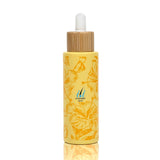
Immediately following a wax, the skin is at its most sensitive. Your first step should always be to apply a high-quality, soothing post-wax oil. A product like Black Coral's ili Oil is formulated to gently dissolve any remaining wax residue while its calming ingredients work to reduce initial redness and soothe the skin.
The quality of post-wax care directly correlates with the prevention of ingrown hairs. Professionals understand that at-home waxing, when combined with a consistent aftercare routine, can reduce the incidence of ingrown hairs by 40%. In contrast, shaving is known to cause them in 60% of cases. This efficacy is a key driver behind the 25% growth of the North American home waxing market since 2020.
The First 48 Hours: A Very Important Time
Your skin needs extra care for the first 24 to 48 hours after waxing. During this time, the hair follicles are open, which makes the area more likely to get bacteria and irritation.
To keep your skin calm and smooth, don't do these things:
-
Avoid hot showers, baths, saunas, and steam rooms. Heat can make redness and sensitivity worse. Choose water that is cool or room temperature.
-
Stay away from deodorants, antiperspirants, and any skincare products that have alcohol or strong scents in them. These can make open pores hurt and get clogged.
-
Friction: Wear soft, loose-fitting clothes made of natural fibers like cotton. Synthetic fabrics that are too tight can hold in heat and sweat, which can be annoying.
-
Avoid direct sunlight and hard workouts when you're sweating. UV rays can make skin that has just been waxed darker, and sweat can bring bacteria into open follicles.
What the experts say: Think of your skin after waxing as a blank slate. The goal is to keep it calm, cool, and clean. During this first stage of healing, a minimalist approach works best.
Long-Term Care for Long-Lasting Smoothness
You can move on to a simple maintenance routine after the first 48 hours. This is the most important thing you can do to keep your underarms smooth and stop ingrown hairs from happening again.
Start gently scrubbing the area two to three times a week. This method gets rid of dead skin cells that can hold onto new, finer hairs as they grow back.
It's just as important to moisturize every day. When the skin is hydrated and soft, new hairs can easily get through the surface instead of getting stuck underneath. This is how professionals keep their skin soft, healthy, and smooth between waxing appointments: by doing simple things all the time. Check out our full list of important after-waxing care products for more information.
Fixing common problems with waxing at home
Even with careful planning, waxing your armpits at home can sometimes be hard. It's normal to have a small problem while learning. The most important thing is to know how to stay calm in these situations to protect your skin and make sure everything goes smoothly.
Let's go over some common problems and how professionals fix them.
Dealing with Problems with Wax Consistency
Getting the right texture for hard wax is very important. The whole process can become messy and take longer if the consistency isn't right.
-
If the wax is too sticky or stringy, it usually means it isn't hot enough yet. Raise the temperature of your warmer a little bit and let the wax melt more until it is smooth and has a consistency like honey. It should drip slowly from the applicator, not quickly.
-
If the wax is too brittle and cracks, it usually means that it was put on the skin when it was too hot or that it was left on for too long. Make sure the wax is warm enough to be comfortable when you put it on. Take off the strip when it is no longer sticky but still bendable.
Taking care of missed hairs and redness
When you first start using this method, it's normal to find a few stray hairs or have some redness. Your answer is very important.
Don't give in to the urge to put wax back on the same spot right away. Re-waxing is the fastest way to make your skin very irritated or lift it up. People often make the mistake of waxing too much at home because the skin in the underarm is very sensitive.
Instead of waxing again, use clean tweezers to pull out any stubborn hairs. If you missed a bigger patch, it's safer to wait at least 24 to 48 hours before trying to wax that area again.
A little bit of redness is a normal inflammatory response and should go away in a few hours. Putting a cold compress on the area can help right away by tightening blood vessels and calming the skin.
Fixing mistakes when applying and removing
Sometimes, problems come from the application itself, usually because the hair is the wrong length.
The wax won't be able to hold on well enough if your hair is too short (less than the length of a grain of rice), which will make the results uneven. It would be best to wait another week so that more growth can happen. On the other hand, if your hair is too long, it can hurt more and not work as well. Cut it down to about 1 cm before you start.
If sticky wax residue remains, avoid scrubbing the skin. A quality post-wax oil is designed to gently dissolve any leftover wax while simultaneously calming the skin. For more information, you can learn how to remove wax from skin with quick and safe solutions in our dedicated guide.
Mastering underarm waxing at home requires practice. By understanding how to resolve these common issues, you will build the confidence to perform any waxing session with the composure of a seasoned professional.
Your Underarm Waxing Questions Answered
Let's address some of the most frequently asked questions about underarm waxing at home. Understanding these details will enhance your confidence and ensure every session delivers smooth, professional results.
How Long Should My Underarm Hair Be?
This is arguably the most critical factor for a clean, effective wax. For hard wax to perform optimally, your hair should be approximately the length of a grain of rice. This translates to roughly 6 millimetres (or 1/4 inch).
If hair is too short, the wax cannot grip it properly, leading to patchy results and frustration. Conversely, if it is significantly longer than a centimetre, the removal can be more uncomfortable. A careful trim with safety scissors can bring your hair to the ideal length for a clean removal.
How often should I wax my armpits?
For long-term results, you need to be consistent. Most people should wax their underarms every three to four weeks. This schedule fits with how hair grows naturally.
Sticking to a regular schedule has benefits that go beyond keeping things smooth. Consistent waxing can weaken the hair follicle over time. You might notice that the hair that grows back is finer, softer, and maybe even less thick.
If you wax too often, your skin may become irritated. If you wait too long, the long-term benefits will be lessened. Watch how quickly your hair grows and find a rhythm that works for you.
Is it normal for your skin to be red after waxing?
Yes, it's normal to have a little redness right after waxing. When hair is pulled out of the follicle, the skin naturally becomes inflamed.
This redness should be mild and usually goes away on its own in a few hours.To accelerate the calming process, you can apply a cold compress or a soothing post-wax oil, such as our Black Coral ili Oil. If you experience severe irritation, bumps, or redness that persists for more than 24 hours, it is advisable to allow your skin to rest and review your pre- and post-wax care procedures.
Ready to achieve lasting smoothness with professional-grade products? Explore the Black Coral Wax collections to find the ideal hard wax for your skin type and needs.