Why Hard Wax Is the Best Choice for Coarse Hair
As an esthetician, you know that coarse hair is hard to work with in its own way. If the wrong product is used, its follicles can break, resist stubbornly, and make clients more uncomfortable. This is exactly where hard wax shines.
Soft wax, also called strip wax, needs a fabric strip and sticks to both hair and skin. Hard wax, on the other hand, "shrink-wraps" the hair. The wax gets cooler and harder, which makes it grip each strand tightly at the hair shaft. The wax lifts the hair from the root without pulling or tugging on the delicate skin around it when it is taken off.
The grip without the pain
This one-of-a-kind move is the key to making the experience less painful, especially in places where hair grows the thickest. It greatly lowers the chance of skin lifting, redness, and irritation that often happens with strip waxes. This difference is important for clients with coarse hair who are sensitive.
Data from the market backs this up. Some studies show that hard wax can cut pain in the bikini and underarm areas by as much as 40%. When it comes to coarse hair that is more than 5mm long, hard wax works 95% of the time, while soft gels only work 70% of the time. After treatment, it even helps reduce ingrown hairs by 30%. The most recent report on the hair removal wax market has more information.
Professional Takeaway: A key advantage of hard wax is its ability to be reapplied to the same spot. If a few stubborn hairs remain after the first pull, you can safely apply a small patch to capture them without damaging the skin—a practice that is not recommended with soft wax.
Hard Wax vs Soft Wax for Coarse Hair At a Glance
To help you select the right product for your services, a direct comparison is useful. While both wax types have their place in a professional treatment room, their performance on thick, stubborn hair is markedly different. For a comprehensive analysis, explore our complete guide on hard wax vs soft wax for estheticians.
The table below provides a quick reference for why hard wax for coarse hair is the professional standard for a clean, efficient, and comfortable client experience.
|
Feature
|
Hard Wax (e.g., Black Coral Pele Beads)
|
Soft Wax (Strip Wax)
|
|
Grip Mechanism
|
Shrink-wraps and grips hair only
|
Adheres to both skin and hair
|
|
Best For
|
Coarse, thick hair; sensitive skin
|
Fine to medium hair; large areas
|
|
Pain Level
|
Lower, as it doesn't pull on the skin
|
Higher, due to skin adhesion
|
|
Reapplication
|
Can be reapplied to catch missed hairs
|
Not recommended; high risk of skin lifting
|
|
Residue
|
Minimal; hardens and lifts cleanly
|
Can leave a sticky residue requiring oil
|
In the end, using the right wax is very important for gaining the trust of your clients and making sure they leave every appointment with smooth, irritation-free skin.
How to Choose the Right Hard Wax for Different Parts of Your Body
When you use hard wax on coarse hair on different parts of the body, you can tell that not all hard waxes are the same. Choosing the right formula isn't just a matter of taste; you need to make sure that the wax's properties, like how flexible it is, how well it grips, and how long it takes to set, match the area you're treating.
This well-informed choice leads to a better service, better results, and a happier, more comfortable client.
A wax that is very flexible is necessary for areas of skin that are contoured or sensitive. A wax that stays flexible as it cools can fit the body's natural shape without breaking or becoming brittle. This is a must for areas like the bikini line and underarms, where the skin is thin and hair grows in different directions.
Conversely, for larger, flatter areas with thick, coarse hair - like the back, chest, or legs - a wax with a slightly faster setting time and stronger structure can increase workflow efficiency. This allows you to apply longer strips and work more quickly without sacrificing that all-important grip.
For Contoured and Sensitive Zones
When tackling a bikini line, Brazilian, or underarms, a highly pliable, polymer-blend wax is your greatest asset. These formulas are engineered to remain supple, which is vital for two reasons. First, it allows the wax to shrink-wrap tightly around every coarse hair, even on uneven skin. Second, it prevents the strip from cracking upon removal, facilitating a clean pull in one motion.
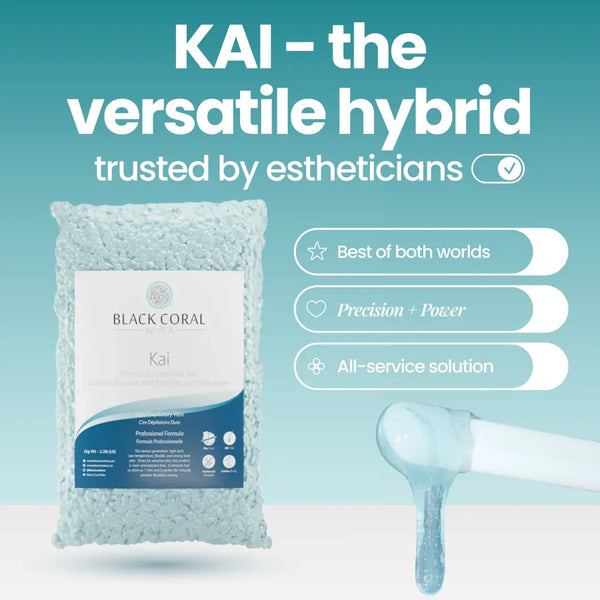
Find waxes that are made just for sensitive skin. Black Coral Wax's Kai Hard Wax Beads, for instance, are great for these kinds of delicate services. Its amazing flexibility makes it perfect for the detailed work that a Brazilian wax needs. It helps to reduce pain while still holding on to stubborn, coarse hair.
The ingredients in a wax are just as important as how well it works. Botanical extracts that soothe the skin can help reduce redness and inflammation right away. This is a big concern for people with coarse hair on sensitive skin.
For Bigger Areas with Thick Growth
When you have to work on bigger areas like the back, chest, or even full legs with coarse hair, you need to be efficient. You still need to be flexible, but you can speed up the service by using a wax that sets a little faster. A strong formula will make a strong, solid strip that can remove a lot of coarse hair at once.
Black Coral's Pele Hard Wax Beads are a great example of a strong, all-purpose formula that works well for this. It has the strength to hold onto thick hair without breaking, so you can use bigger strips and get these bigger areas done quickly. Even though it's bad for hair, it melts at a low temperature, which keeps your client's safety and comfort at the top of your list. Check out our guide on how to use hard wax on legs for more specific advice on this.
The Growth of Specialized Ingredients
The market for hard wax is growing quickly and is expected to be worth $1.2 billion worldwide by 2026. This growth is because it works better on coarse hair, where it can cut pull trauma by up to 50% compared to regular strip wax.
Specialized formulas are becoming more popular as part of this trend. For example, hard wax beads with charcoal in them are becoming very popular for Brazilian and coarse pubic hair waxing. The charcoal cleans the hair follicles during the service, leaving behind results that are very smooth and can last for four to six weeks. Recent research in the industry can help you learn more about these market trends.
In the end, what makes a professional stand out is their ability to choose the right wax for each body part. It shows your clients that you are dedicated to giving them the best and most comfortable service possible, which builds their trust in your skills.
Your Professional Guide to a Perfect Coarse Hair Wax
The first drop of wax on coarse hair's skin is not the start of a successful wax. The key to a smooth, comfortable session instead of a frustrating one is careful planning.
Professionals have to learn this pre-wax routine. It's not just about cleaning the skin; it's also about making the perfect surface for your coarse hair hard wax to do its job perfectly, grabbing every hair without sticking to the skin.
The Client Consultation and Skin Check That Are Needed
Even with regular clients, every appointment should start with a short consultation. Hormones, new medications, or even the weather can all change skin conditions. Always ask if they have started using any new skin care products, especially ones with retinoids or strong acids, because these are big reasons not to wax.
Next, look closely at the area you are going to wax. You are looking for:
-
Never wax skin that is already red, irritated, or inflamed, or that has been sunburned or broken.
-
If you have lesions or moles, you need to be very careful when you work around them.
-
Length of hair: The best length for coarse hair is about 6mm, which is about the size of a grain of rice. The wax won't stick if the hair is too short.
This quick check-in does more than just keep you safe. It shows that you are a caring, thorough professional who can be trusted to provide great service.
Cleansing the Canvas for Maximum Grip
Your first hands-on step is a thorough cleanse. The skin’s natural oils, sweat, or any lotion residue will create a barrier that prevents the wax from getting a good grip on coarse hair. A dedicated pre-wax cleanser is essential here.
Use a cotton pad to apply the cleanser, wiping against the direction of hair growth. This action helps lift the hairs and ensures the skin at the base of each follicle is completely clean. It’s a simple step that guarantees your wax can form that perfect "shrink-wrap" bond directly onto the hair.
Professional Insight: If the skin is not properly cleansed, the wax may slip. This can lead to hair breaking off at the surface instead of being removed cleanly from the root—an outcome to be avoided.
The Power of Pre-Wax Oil
Once the skin is cleansed and completely dry, it's time for pre-wax oil. While it might seem counterintuitive to add oil right after removing it, this oil serves a different—and absolutely critical—purpose.
A very light layer of pre-wax oil creates a protective barrier over the skin. This is what ensures the hard wax adheres only to the hair and not the skin itself. For minimizing pain and preventing post-wax redness, this is arguably the most important step, especially on sensitive areas like the bikini line or underarms. A little goes a long way; you just want a subtle sheen, not a greasy feel.
Achieving the Perfect Wax Temperature and Consistency
While you’re prepping the skin, your wax pot should be bringing your hard wax for coarse hair to its ideal working temperature. The goal isn't just to melt it; you need to achieve the perfect, workable consistency.
For tough, coarse hair, your wax should have the texture of thick, smooth honey or molasses. If it’s too thin and runny, it is too hot and will not properly coat the thick hairs. If it’s stiff and clumpy, it is too cool and won’t spread evenly or grip correctly. This consistency is crucial, and you can learn more about how factors like skin prep affect your pull in our article on exfoliating before waxing for smoother results.
Always check the temperature on your own inner wrist before using it on a client. It should feel warm but not too hot. This is a simple safety check that lets your client know they are in good hands. You are ready for a perfect service if your skin is clean and the wax is at the right temperature.
How to Apply and Remove on Coarse Hair
This is where skill really counts. Your ability to apply and remove wax is what makes the difference between a smooth, comfortable wax and a frustrating, patchy one, especially when you have coarse hair. Experienced professionals know how to find the right balance of pressure, temperature, and timing.
Every move counts when you're working with thick, stubborn follicles. A small mistake that might not be noticed on finer hair can cause it to break, stubborn stragglers, and an unhappy client. Getting your technique right is what makes people trust you and keep coming back.
The Craft of the Application
It's not enough to just spread hard wax on coarse hair. It starts with firm, planned pressure. When you put the wax on, press the applicator firmly against your skin and move it slightly against the way your hair grows. This easy motion holds the wax at the base of those tough follicles, making sure it stays in place from the root.
Once the wax is in place, you can spread it out evenly in the direction that your hair grows. A strip that is about the thickness of a nickel is perfect because it is strong but not wasteful. A consistent layer makes sure the wax sets evenly and is strong enough to pull cleanly.
Change your approach for areas that are known to be hard to deal with and have hair growth in more than one direction, like the underarms, bikini line, or chin:
-
Work in Smaller Areas: Instead of working on a big area all at once, break it up into smaller, easier-to-handle parts. This gives you more control and helps you get all the hairs, no matter how they grow.
-
Think about layering: If your hair is really tough, one layer might not be enough. After putting on your first strip, wait a few seconds and then put on a second, thinner one on top of it. This can help cover the hair shaft completely, making it easier to pull out.
A non-negotiable part of any hard wax application is creating a clean "lip" or "tab" at the end of the strip. This slightly thicker edge is what you will use to grip for removal. A well-made lip is key to a quick, clean pull.
Perfecting the Removal Process
The removal is the moment of truth. Before you pull, use your free hand to hold the skin taut in the opposite direction of removal. Taut skin is absolutely essential for coarse hair—it dramatically reduces pain and prevents the skin from lifting with the wax.
Grip the lip you created and pull. The direction is critical: your pull must be parallel to the skin, not up and away from it. Pulling upwards is a primary cause of hair breakage, which leaves behind stubble and increases the likelihood of ingrown hairs. The pull should be quick and confident.
This precise technique makes all the difference. We break these steps down even further in our complete guide on how to use hard wax. The second the strip is off, immediately place your hand firmly over the freshly waxed area. This simple pressure helps calm nerve endings and instantly soothes the sensation.
Why technique is important for making clients feel comfortable
The data is clear. The global market for hair removal wax is expected to reach USD 20.78 billion by 2030. Hard wax is a big reason for this growth because it works well on coarse hair. According to surveys of salons in North America, 65% of clients with coarse hair specifically ask for hard wax because it causes up to 90% less redness than soft wax. Recent studies of the hair removal market go into more detail about these trends.
These numbers show that customers want both comfort and results. The way you apply and remove it directly affects how good it feels. A perfect wax doesn't just leave skin smooth; it also builds trust and loyalty, making you known as an expert they can rely on.
Important Aftercare to Stop Ingrown Hairs
The service doesn't end when the last strip is taken off. It is your job as a professional to make sure that your client's skin stays smooth and healthy long after they leave your treatment room, especially if you used hard wax on coarse hair. Your skills really show in those first few minutes after waxing.
This is your chance to calm the skin, stop problems before they start, and give your client the right advice for long-term results. The right aftercare is what makes a good wax great and builds the kind of trust that keeps clients coming back.
Immediately Post-Wax Calming and Cleansing
First, gently cleanse any remaining wax residue. A quality post-wax oil is your ideal tool for this. It dissolves sticky bits without harsh rubbing, which is the last thing freshly waxed skin needs.
This step serves a dual purpose. The right oil will also begin calming redness and rehydrating the skin immediately. Always look for products with gentle, non-comedogenic oils that won’t clog the now-open follicles. It’s that initial soothing touch that sets the stage for a calm, comfortable recovery.
Professional Tip: A histamine reaction—presenting as small, raised bumps or hives—is normal, especially after waxing coarse hair. Reassure your client that this is a temporary response. A cool compress and a calming product will help it subside within a few hours.
The Proactive Fight Against Ingrown Hairs
Coarse and curly hair types are naturally more susceptible to becoming ingrown. As the hair regrows, its strong, curved shape can cause it to become trapped beneath the skin's surface. That’s why a solid aftercare plan isn’t just a recommendation—it’s a necessity.
Your role is to equip clients with the tools and knowledge to keep their skin clear between appointments.
-
Gentle Exfoliation: Advise your clients to wait at least 48-72 hours before they start exfoliating. After that, a gentle scrub or a chemical exfoliant 2-3 times a week is ideal. This clears away the dead skin cells that can trap new hairs.
-
Targeted Treatment Serums: This is where professional products demonstrate their worth. An aftercare serum or oil specifically formulated to prevent ingrowns is essential. These formulas contain active ingredients that keep follicles clear and reduce inflammation.
-
Proper Moisturization: Hydrated, supple skin makes it easier for new hairs to break through the surface without getting stuck. Recommend a lightweight, non-comedogenic moisturizer for daily use.
For a deeper dive, you can learn more by preventing ingrown hairs after waxing in our professional guide. It's a great resource to share with clients who need extra guidance.
Recommending the Right Aftercare Ingredients
To truly assist your clients, explain why their aftercare works. When you suggest a product like Black Coral's ‘ili’ Ingrown Hair Oil, you can point to the ingredients that deliver results.
Here are the key ingredients to look for in high-quality aftercare products:
-
Salicylic Acid: As a beta-hydroxy acid (BHA), it exfoliates deep inside the pores. It is excellent for breaking up the debris that causes blockages and traps hair.
-
Tea Tree Oil: Known for its natural antibacterial and anti-inflammatory properties. It helps keep follicles clean and calms any redness from emerging hairs.
-
Glycolic Acid: An alpha-hydroxy acid (AHA) that works on the skin's surface. It helps slough off dead cells, clearing a smooth path for hair to regrow properly.
When you explain the benefits, you transition from a salesperson to a trusted expert. This approach shows you genuinely care about their skin health, ensuring they love their results and know exactly how to maintain them.
Your Top Coarse Hair Waxing Questions, Answered
Coarse hair can be challenging, even for seasoned professionals. Clients may feel nervous, and occasionally, results may not be as flawless as desired. Having clear, confident answers ready not only builds client trust but also sharpens your own skills. Let's address some of the most common questions that arise when waxing coarse hair.
Can I Use Hard Wax on Short Coarse Hair?
Yes, absolutely. A high-quality hard wax is specifically designed to grip stubborn hairs as short as 6mm (the length of a grain of rice). The key to successfully removing short, tough hairs lies in the technique.
Start with meticulously clean skin and a very light layer of pre-wax oil. This is non-negotiable—it creates a barrier so the wax adheres to the hair, not the skin. When you apply your strip, use firm, steady pressure to ensure the wax fully envelops the hair shaft, creating a solid anchor for a clean pull.
If a few stubborn hairs remain, that is the benefit of hard wax. You can safely re-apply a smaller, clean-up strip over the same spot without stressing the skin.
Why Does Coarse Hair Sometimes Break at the Surface?
Hair breakage during a wax is frustrating, but it is almost always preventable. When a coarse hair snaps instead of pulling from the root, it usually points to one of three common issues.
-
Your Wax is Too Cool: If the wax is not at its optimal temperature, it becomes stiff and cannot shrink-wrap properly around a thick hair. It lacks the flexibility and grip to pull it from the follicle.
-
The Application is Too Thin: A paper-thin layer of wax will not create a strong strip. It will crack or tear on removal, leaving the deeply rooted hair behind.
-
Your Pulling Technique is Incorrect: The pull must be swift and parallel to the skin. Pulling up and away from the body is the number one cause of hair breakage.
To ensure success, always check that your wax has a smooth, honey-like consistency. Apply a strip with even thickness, and always hold the skin taut before removal.
What Is the Best Way to Reduce Pain on Sensitive Areas?
Ensuring client comfort, especially in sensitive zones like the bikini line or underarms, is what distinguishes a good esthetician from a great one. It’s a combination of smart preparation and confident technique.
Always begin with a quality pre-wax oil. This creates that vital barrier between the skin and the wax, which dramatically reduces the stinging sensation.
From there, work in small, manageable patches. Attempting to wax a large, contoured area in one go is a recipe for pain and patchy results. A game-changing professional tip is to synchronize with your client’s breathing. Ask them to take a deep breath in as you apply the wax, then exhale sharply as you pull. The moment the strip is removed, place the palm of your hand firmly on the area. This quick compression helps soothe the nerve endings immediately.
How Do I Prevent Ingrown Hairs After Waxing?
Coarse hair is naturally more prone to becoming ingrown due to its thickness and tendency to curl. This makes client education a critical part of your service—prevention is key.
Advise your clients to begin a gentle exfoliation routine 2-3 days after their appointment and continue it a few times a week. This can be a physical scrub or a chemical exfoliant with ingredients like salicylic or glycolic acid.
For the best results, they need a targeted treatment. Recommend a specialized product like Black Coral's ‘ili’ Ingrown Hair Oil, which is formulated to keep follicles clear and reduce inflammation. Finally, remind them to wear loose, breathable clothing for the first 24-48 hours to prevent friction while the skin heals.
At Black Coral Wax, our mission is to support professionals like you with products that deliver exceptional, consistent results. Our waxes and aftercare are designed to give you the confidence to master any service, no matter how challenging.
We invite you to explore our collections and see why thousands of estheticians trust our formulas for a safer, more comfortable client experience. Discover the Black Coral Wax difference today.