Best Hard Wax for Thick Hair: Pro Tips & Top Recommendations
When you’re working with thick hair, the wax has to do more than feel warm and spread nicely. It has to grip with structure. It needs enough elasticity to flex instead of crack, and enough shrink-wrapping action to surround the hair shaft so the pull removes from the root rather than snapping at the surface. That’s what separates an average service from a smooth, confident one.
If you’re trying to find the best hard wax for thick hair, the answer starts with understanding why some formulas fail on coarse growth and why others remove it cleanly.
FREE COURSE
Turn Your Passion for Beauty Into a $75K+ Waxing Business
GET IT NOW!
Course successfully sent. 🎉
Please go to your inbox to receive it.
The Challenge of Waxing Thick and Coarse Hair
A newer waxer often assumes thick hair needs hotter wax or more pressure. In practice, that usually creates more irritation, not better removal. The challenge is that coarse hair resists shallow grip. If the wax only sits on the surface of the strand, the pull meets resistance before the follicle releases.
That’s why thick hair often shows the same three problems at once. You see breakage, scattered missed hairs, and more client sensitivity on the second pass. The service slows down, and your confidence can drop with it.
Thick hair isn’t just “more hair.” It behaves differently under tension, so your wax has to behave differently too.
Hair growth patterns also matter. Underarms, bikini areas, chest, and some facial zones can grow in multiple directions, which makes a strong but flexible wax even more important.
Why Hard Wax Is the Superior Choice for Thick Hair
Hard wax works better on thick hair because of how it grips, not just because it feels stronger. As it cools, it tightens around the hair shaft. That tightening action is what many professionals describe as a shrink-wrap effect. Instead of relying mainly on surface stickiness, the wax forms around the strand so the pull has better mechanical hold.
Coarse hair is harder to remove cleanly because it’s thicker and more resistant to weak adhesion. A good hard wax cools into a flexible strip that wraps the hair and lifts with a strong grip. That matters on firmly rooted growth, where a brittle pull can snap the strand before it exits the follicle.
Practical rule: For thick hair, choose wax based on elasticity and grip pattern first. Temperature matters, but it isn’t the main reason removal succeeds.
By contrast, waxes that rely more on surface adhesion can leave you with partial removal. The hair bends, stretches, or breaks, especially if the strand is strong and the root is anchored.
Key Attributes of the Best Hard Wax for Thick Hair
If you’re evaluating formulas, don’t stop at “low temp” or “for sensitive skin.” Those features matter, but they don’t tell you how the wax behaves when it meets dense growth. The best hard wax for thick hair usually shows four performance traits.
| Attribute |
Why it matters for thick hair |
What to look for |
| High elasticity and flexibility |
Thick hair creates more resistance during removal. Flexible wax is less likely to crack mid-pull. |
A strip that bends slightly before release and peels off in one clean piece |
| Strong encapsulation grip |
Coarse strands need the wax to surround the shaft, not just stick to the top layer |
A formula that hugs the hair and removes stubborn growth without shredding |
| Low-temperature melting point |
Comfort and safety still matter, especially on intimate or reactive areas |
Warm, spreadable texture that doesn’t feel overly hot on contact |
| Quick, consistent set time |
Thick hair services can become slow if the wax stays tacky too long or sets unevenly |
Predictable cooling, firm edges, and a strip that’s ready to pull without guesswork |
How to judge elasticity
Elasticity is what keeps a strip intact when the hair pushes back. If the wax cracks, chips, or splinters during removal, the formula may be too brittle for coarse growth. You want a strip that feels pliable as it sets, then strong when pulled.
Why grip should feel anchored, not sticky
There’s a difference between wax that feels tacky and wax that feels secure. Tacky wax can drag. Secure wax feels like it has locked around the base of the hair. That’s the kind of grip that gives you a cleaner first pull.
For a broader product selection framework, our article on choosing hard wax beads for every skin type is helpful, especially if you’re balancing hair texture with skin sensitivity.
Set time matters more than people think
A wax that sets too slowly can flatten around the hair without forming a strong strip. One that sets too fast may not give you enough working time on curved areas. For thick hair, consistency is the goal. You should know when the strip is ready by feel, not by guessing.
Professional Application Technique for Flawless Results
Even excellent wax underperforms with rushed application. Thick hair needs a more deliberate setup so the wax can anchor properly before removal.
Start with skin prep that improves contact
Clean the area well. Oil, lotion, sweat, and product residue reduce grip and encourage slipping. If you use a protective pre-wax product, keep it light. Too much creates glide where you need control.
Then assess direction carefully. Thick hair often grows in conflicting patterns, especially underarms and bikini zones. Divide the area into smaller sections before you apply.
Use pressure on application
Many waxers achieve poor results at this point. Don’t float the wax over the hair. Press the applicator with intention so the wax settles around the base of the strands, then smooth it in the direction of growth. Finish with a slightly thicker edge or lip so removal is clean and fast.
Pressing the wax in is what gives you anchor. Spreading it on top is what leaves hair behind.
A strong routine usually looks like this:
-
Clean and dry the skin well. Residue blocks adhesion.
-
Work in small zones. Thick growth is easier to control in sections.
-
Apply with firm pressure. This helps the wax surround the hair shaft.
-
Build a clear lip. You need something sturdy to grip on removal.
-
Let it set fully. It should feel firm, not stringy.
-
Hold skin taut and pull parallel. Pulling upward invites breakage.
For step-by-step foundational technique, see Black Coral Wax’s guide on how to use hard wax.
Remove with speed, not force
The pull should be quick and close to the skin. New waxers often compensate for poor grip by pulling harder or higher. That usually increases discomfort and leaves more breakage. Good removal feels controlled.
How Black Coral Wax Meets the Needs of Professionals
When professionals look for a formula for coarse growth, they usually want a wax that spreads smoothly, sets with consistency, pulls flexibly, and grips thick hair without feeling harsh on the skin. Black Coral Wax’s hard wax is positioned around those practical needs.
A good coarse-hair wax should feel like it’s doing the heavy lifting with you, not asking you to fight the strip.
Pele Hard Wax Beads stand out as the most targeted choice. Specially formulated for thick and coarse hair, Pele delivers strong grip with minimal discomfort, and its flexible, elastic formula means it doesn't crack or snap during removal. A unique visual cue sets it apart as well. The beads start dark and volcanic in solid form, then transform into a fiery red-orange liquid once melted, making it easy to read consistency at a glance. For clients with coarse growth in bikini, underarm, or chest areas, Pele is a reliable first-pull formula.
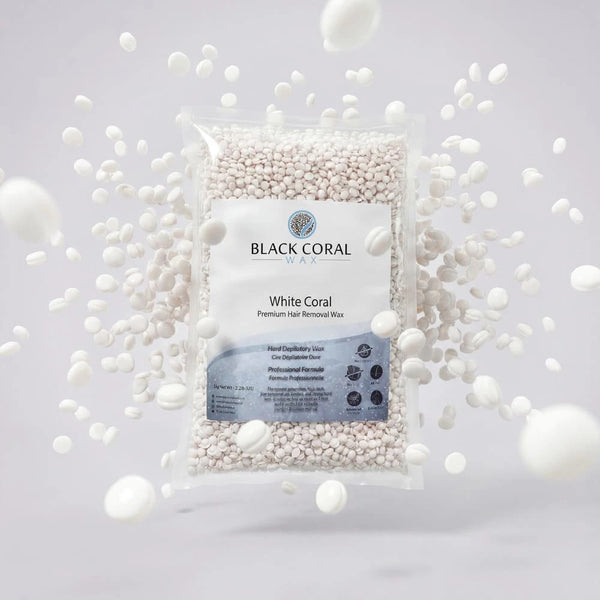
The Black Coral Hard Wax is another strong all-around option-a versatile formula designed for exceptional grip on even the shortest and coarsest hairs, and well suited for professionals who need consistent results across a mixed client base.
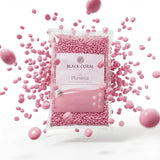
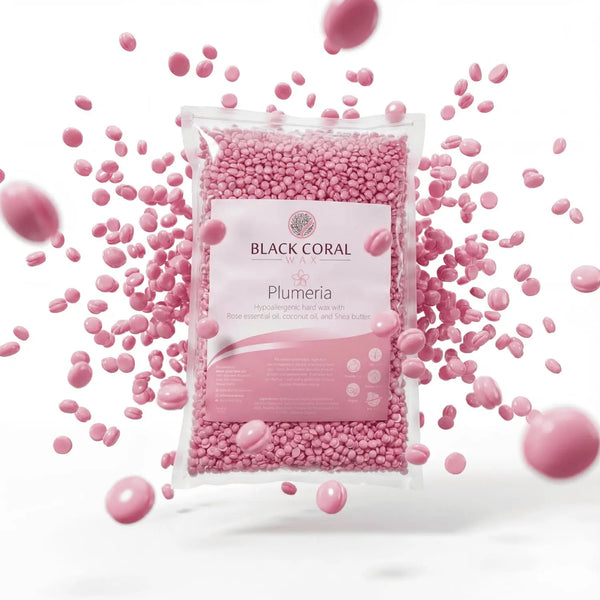
If your client has thick hair but also reactive or sensitive skin, Plumeria Hard Wax is worth keeping in your kit. Its low-temperature, high-elasticity formula grips coarse and fine hair alike while staying gentle enough for sensitive areas like the bikini line and face. That combination makes it a practical choice when you need removal strength without compromising comfort.
The right wax is only half the equation
Working with thick hair is a skill that builds over time, and the right knowledge accelerates that process. If you want to refine your technique, deepen your understanding of hair types, or expand your service menu, Black Coral Academy's online waxing courses give you structured, professional training you can complete at your own pace. From waxing fundamentals to advanced client care, the courses are designed for estheticians who want results they can trust in the treatment room.
Frequently Asked Questions About Waxing Thick Hair
Should thick hair be trimmed before waxing?
Sometimes, yes. If the hair is very long, trimming can make application cleaner and reduce tangling in the wax. Keep enough length for the wax to grip well.
Is hotter wax better for coarse hair?
Not necessarily. Higher temperature doesn’t replace good elasticity or proper grip. Overheated wax can feel uncomfortable and may spread too thin, which often makes thick hair removal worse.
Why does the wax look fine but still leave stubble?
That usually means breakage, not poor coverage. The wax may have adhered, but it didn’t encapsulate the hair strongly enough to remove it from the root.
Can I use hard wax on sensitive areas if the hair is thick?
Yes, if the formula is suitable for those areas and your technique is controlled. Thick hair on underarms, bikini zones, and face usually responds best when you work in smaller sections and support the skin carefully.